

Texas Pro Remodeling designs and builds home additions for Dallas homeowners who love where they live and need more room. We handle the survey, the drawings, the structural engineering, the City of Dallas permits, and the build, from a bump out that gains a few feet to a primary suite, a guest wing, or a full second story. One team, one contract, one point of contact.
Typical Investment | $55K – $130K |
Timeline | 4–6 Months |
Project Type | Room Addition |
Permits | We Handle Everything |
Design + Engineering | Included |
Contract Type | Design-Build |
Consultation | Free In-Home Estimate |
Warranty | Lifetime Workmanship |
A+ Rating
Fully Protected
175+ Google Reviews
On All Work
Always Available
What we build | Bump outs, bedroom and bathroom additions, primary suites, home offices, family room extensions, in-law and guest suites, rear additions, and second story additions. |
Where we work | Dallas and the surrounding DFW cities, including Plano, Frisco, McKinney, Irving, Garland, Richardson, Mesquite, Grapevine, Coppell, Allen, Arlington, and Fort Worth. |
Typical Dallas cost | Roughly $150 to $260 per finished square foot when building out, and $250 to $450 per square foot when building up. Most single room additions land between $55,000 and $130,000. |
Typical timeline | Four to nine months from first meeting to final walkthrough. Design, engineering, and permitting take longer than most homeowners expect and account for roughly half the calendar. |
Permits | Every addition in Dallas needs a building permit, plus separate trade permits. Most need a survey, a site plan, and sealed structural drawings. We prepare and file all of it. |
Before design starts | We check your zoning district, setbacks, lot coverage, platted building lines, and any conservation or historic overlay, so you know what can be built before you pay for drawings. |
Estimate | Free in home visit, written scope with named allowances, and a fixed price before any work begins. |
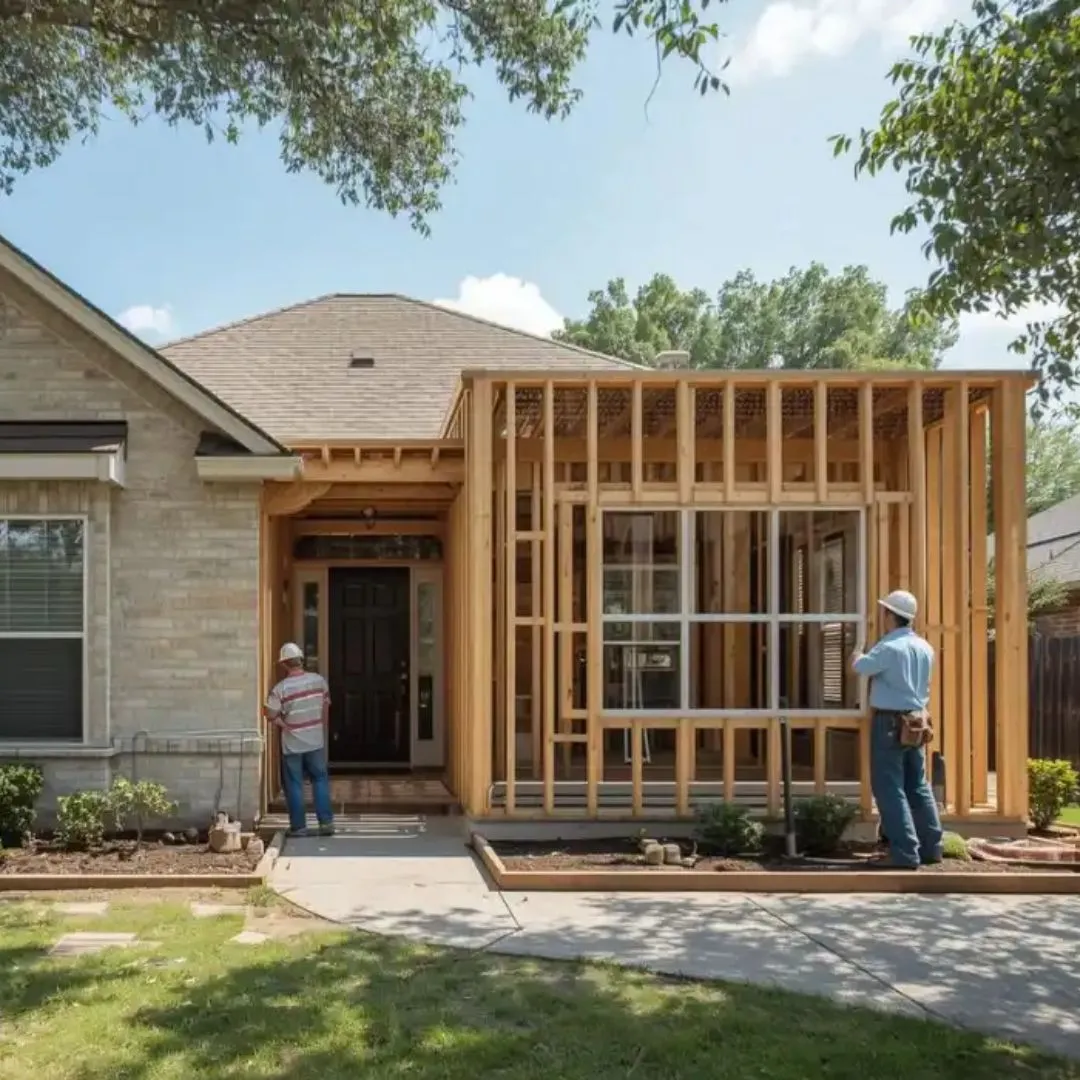
Adding space only matters when it improves the way you live every day. Dallas homeowners often reach out when the house feels too small for the family, the living area feels cramped, there is no private office for working from home, or there is not enough room for guests or relatives.
Some also need a better bedroom layout or want more comfort without leaving the neighborhood they love. We design room additions that solve those problems with layouts that feel practical, balanced, and connected to the rest of the home. The goal is to create a new space that feels natural, useful, and like it has always been part of the house.
Addition type | Typical size | Cost band | Best when |
Bump out | 40 to 150 sq ft | $25k to $65k | A room is nearly right and needs a few feet. Cheapest way to fix a cramped kitchen or bathroom without a full addition. |
Bedroom addition | 150 to 300 sq ft | $45k to $95k | A growing family, a teenager who needs their own room, or a long term guest. |
Home office addition | 120 to 250 sq ft | $40k to $85k | Remote work has moved permanently to the kitchen table and there is nowhere quiet. |
Family room extension | 250 to 450 sq ft | $65k to $140k | The main living space cannot hold the family, let alone guests. |
Primary suite addition | 300 to 500 sq ft | $95k to $190k | The existing primary bedroom is small, has no storage, or has a bathroom that cannot be improved in place. |
In-law or guest suite | 400 to 800 sq ft | $120k to $280k | A parent moving in or regular long stay guests. See the section below on how Dallas treats these. |
Rear addition | 300 to 700 sq ft | $80k to $220k | The back of the house is where the space and the setback allowance are. Usually the most straightforward direction to build. |
Second story addition | 800 to 1,500 sq ft | $250k and up | The lot is small or fully covered and the only remaining direction is up. |
Most homeowners assume the timeline starts at demolition. In addition, roughly half the calendar is spent before anyone breaks ground.
Phase | Typical duration | Notes |
Feasibility and zoning check | 1 to 2 weeks | Survey, zoning district, setbacks, lot coverage, overlays. Establishes what can be built. |
Design and drawings | 4 to 8 weeks | Layout, elevations, and selections. Runs alongside engineering. |
Structural engineering and soils report | 2 to 4 weeks | Foundation design and sealed drawings. Runs parallel to design. |
Permit review | 4 to 10 weeks | Longer where a conservation, historic, or PD district requires design review first. |
Site prep and foundation | 2 to 3 weeks | Piers, forms, pour, cure. Weather dependent. |
Framing | 2 to 4 weeks | The stage where the addition suddenly looks real. |
Roof tie in and dry in | 1 to 2 weeks | Getting the structure weather tight. |
Rough plumbing, electrical, HVAC | 2 to 3 weeks | Followed by inspections before anything is covered. |
Insulation and drywall | 2 to 3 weeks | Inspection required before insulation is covered. |
Exterior finish and matching | 2 to 3 weeks | Brick or siding, windows, trim, paint. Runs partly alongside interior work. |
Interior finishes | 3 to 4 weeks | Flooring, trim, paint, fixtures, doors. |
Final inspection, punch list, walkthrough | 1 to 2 weeks | Final inspection has to pass before the space can be occupied. |
Realistically that is four to six months for a single room addition and six to nine months for a primary suite, a large wing, or a second story. Any contractor promising a full addition in eight weeks is describing framing, not a finished project.
An addition has a lot of moving parts. From your side it runs in three phases.
We visit your home, check your zoning, setbacks, and lot coverage, and confirm what can be built. Then we design the addition, bring in the structural engineer, and give you a written scope with a fixed price. We prepare the full permit package and file it with the City of Dallas. Nothing is ordered or dug until you have approved the scope, the price, and the drawings.
We prepare the site, install the engineered foundation, frame the addition, and tie in the roof. Once the structure is weather tight we run plumbing, electrical, and HVAC, pass the rough inspections, then close the walls. Exterior brick or siding is matched to the existing house while interior finishes go in. One team runs every trade and every inspection.
We complete flooring, trim, paint, and fixtures, pass the final inspection, and walk the finished addition with you. We work through the punch list, clean up, and hand over the space along with your warranty and paperwork in writing.
An addition touches zoning, engineering, permitting, structure, and six trades. Most homeowners do not want to coordinate that, and they should not have to.
We check what your lot allows before you spend money on design. We bring the engineer in early rather than late.
You get a written scope with named allowances, a schedule with real dates, licensed trades on every regulated part of the job, and one point of contact from the first visit to the final inspection. Permits, reviewer comments, and inspection scheduling are ours to manage.

Before hiring a contractor, most homeowners want to see proof. They want to know the contractor can actually build additions that look clean, functional, and well-integrated with the home.
Building out runs roughly $150 to $260 per finished square foot in Dallas, and building up runs $250 to $450. Most single room additions land between $55,000 and $130,000. A primary suite typically runs $95,000 to $190,000, and a second story starts around $250,000. Foundation engineering, roof tie in, and HVAC capacity are the three items that move the number most.
Yes. Any project that adds floor area requires a building permit, plus separate trade permits for electrical, plumbing, and mechanical. You will need a survey, a site plan, architectural drawings, and sealed structural drawings. Dallas handles permitting through the DallasNow portal. We prepare and file the package and schedule every inspection.
Four to six months for a single room addition and six to nine months for a primary suite, a large wing, or a second story. Roughly half of that is design, engineering, and permit review before construction starts.
They depend on your zoning district. R-7.5(A), the most common single family district in Dallas, requires a 25 foot front setback, 5 foot sides, and a 5 foot rear, with lot coverage capped at 45 percent. Platted building lines and conservation or planned development overlays can be more restrictive and override the base code. We check your specific lot before any design work begins.
Usually yes. An addition is built outside the existing envelope for most of the project, so the disruption is lower than a kitchen or bathroom remodel until the connection is opened. Expect noise, dust, and restricted access to one part of the house, plus a few disruptive days when the exterior wall comes out.
Build out when you have yard to spare and your setbacks and lot coverage allow it. It costs less per square foot and it is structurally simpler. Build up when the lot is small or already near its coverage limit. Building up costs considerably more because the existing foundation usually needs reinforcement and you have to find room for a staircase.
Usually, though not always by the full cost. Additions return best when they correct something buyers notice, such as a one bathroom house in a neighborhood of two bathroom houses, or a two bedroom in a family area. Returns are weakest when the finished house becomes noticeably larger or more expensive than everything around it.
Yes, and the key question is whether it has its own kitchen. Without one it is a normal addition. With one it becomes an accessory dwelling unit, which in Dallas is capped at 800 square feet and is not permitted as of right in most single family districts. Many families get what they need from an attached suite without a second kitchen.
That is the goal, and it is mostly decided by the roof tie in and the exterior materials. Brick from before the 1980s is often out of production, so we either source a close match, blend it, or make the transition a deliberate design line. We show you the options before we order anything.
Book a free in home visit. We look at the house, check your zoning district, setbacks, and lot coverage, tell you what will fit, and give you a scope and a number in writing. There is no charge and no obligation.
Tell us what space you need and we will tell you what your lot will allow and what it will cost. The in home visit is free, the estimate is written, and the allowances are named. Call (214) 274-7467 or request your estimate online.