
Embarking on a home renovation is one of the most exciting projects a Texas homeowner can undertake. Whether you’re dreaming of a modern kitchen or a luxurious primary bathroom, success starts with detailed planning long before the first wall comes down.
The sheer scale of a remodel can be overwhelming, but we’ve found that the entire process becomes manageable by focusing on two foundational questions, besides following the home remodeling beginner’s guide. Answering these questions upfront will align your expectations with reality, secure your budget, and ensure your final design delivers maximum value and functionality for your Texas home.
Key Takeaways
|
Question 1: What is Your Renovation Budget? (Securing Financing in Texas)
The number one question that dictates the scope and timeline of your project is the budget. A solid financial plan is your starting point for successful home remodeling projects. In the Texas market, a realistic budget involves more than just estimating costs. It requires strategic financing and preparing for the inevitable. That’s why it is the most important question to ask before hiring a home remodelling company.
The Critical Contingency Budget (Preparing for Construction Surprises)
Experienced homeowners and contractors will always stress the same essential rule: your initial budget is only a starting point. Renovation, especially in older homes, frequently leads to construction surprises.
Once walls are opened, you may uncover hidden issues like outdated electrical wiring, corroded plumbing, or structural concerns that must be addressed before work can continue.
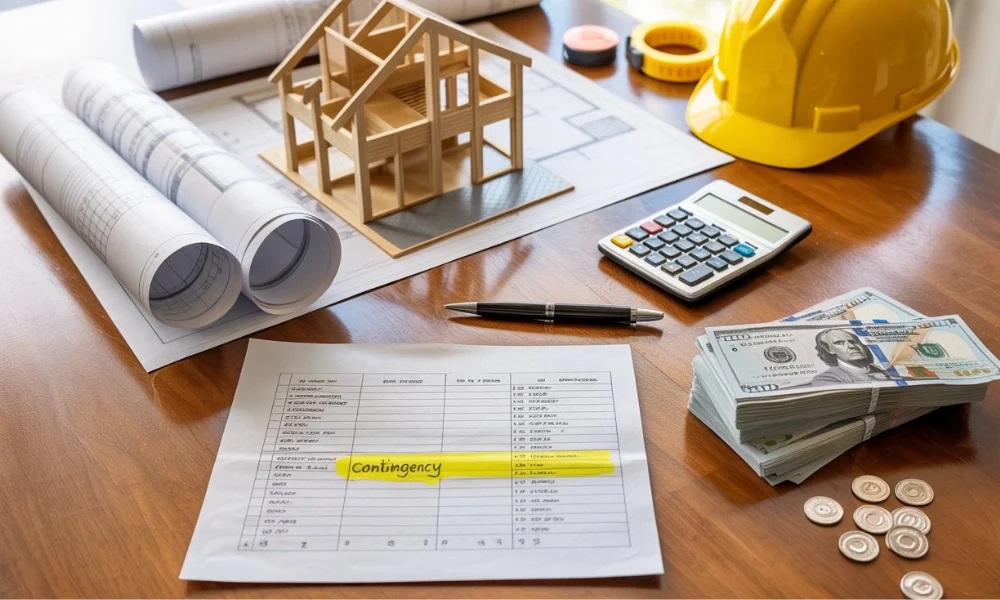
At Texas Pro Remodeling, we strongly recommend building a contingency budget of 10% to 15% of your total project costs. If your remodel budget is $80,000, allocate $8,000–$12,000 as contingency.
This buffer is reserved for these unforeseen expenses. By allocating this fund in advance, you can mitigate financial stress and avoid stop-work orders or sudden decisions that compromise the quality of your renovation.
Financing Options: Understanding Home Equity Loans in Texas
For Texas homeowners, using financing based on your Home Equity is a common path to funding a large-scale remodel. However, Texas has unique constitutional restrictions that you must understand:
- The 80% Loan-to-Value (LTV) Rule: In Texas, the total amount of debt secured by your home (including your primary mortgage and the new Home Equity loan or HELOC) cannot exceed 80% of the home’s appraised value. This strict limit ensures you maintain a safe level of equity.
- Alternative Financing: If a Home Equity option doesn’t fit your needs, consider a traditional Home Improvement Loan, which may offer different limits and terms. Your choice of financing decisions will directly impact your project scope (available specifically for home renovation, remodeling, extension, or repair projects). Be sure to discuss all options with a qualified financial advisor.
Prioritizing Must-Haves vs. Value-Driven Upgrades
Every renovation involves a series of choices between Dallas home remodeling essentials and needs. To manage your budgeting effectively, you must link your spending directly to your core goals.
- Must-Haves: Essential items that address the root problem (e.g., replacing broken appliances or fixing leaky plumbing).
- Value-Driven Upgrades: These decisions improve the long-term value and ROI of your home. Focus on high-impact materials and layout changes that significantly improve functionality. A good example is choosing durable, low-maintenance finishes over trendy, expensive alternatives.
Question 2: What is the Purpose and Scope of Your Project? (Defining Goals and Functionality)
A beautiful design is meaningless if the space doesn’t work for your family’s daily life. This second question forces you to define the why and how of your renovation before settling on the what.
Determining Functionality First (The “Why” Before the “What”)
Before selecting cabinet colors or tile, step back and determine the core functionality of the space. Why are you remodeling?
- Is the existing layout impeding the traffic flow of your daily life?
- Do you need better storage solutions for a growing family?
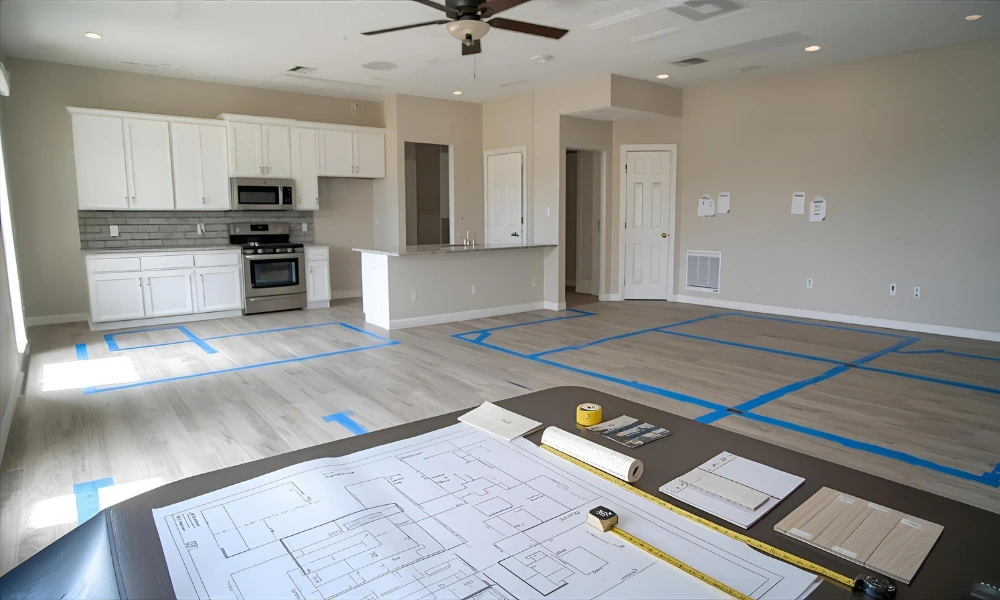
For a kitchen project, for instance, your decisions should center around efficiency, such as optimizing the kitchen work triangle. Prioritizing functionality ensures that your new space not only looks great but also maximizes daily comfort and usability. You may need to remove wallpaper or put on a new one to achieve that.
Balancing Design Aesthetics with Long-Term Maintenance
Your design goals should strike a balance between visual appeal and durability. Short-term savings on low-quality materials can often lead to significantly higher long-term maintenance costs down the road.
- Durability: Choose materials and finishes that are built to last, especially in high-traffic areas like the kitchen and modern, functional bathroom.
- Efficiency: Frame upgrades like smart lighting controls, energy-efficient windows, and high-efficiency appliances are not just expenses. They are investments that will maximize long-term efficiency and utility value for your Texas home.
The Daily Life Disruption Timeline and Mitigation
Both interior and exterior remodeling are intrusive. Your timeline must account for real-world disruption. Discuss the scheduling management plan with your team early on.
For a full kitchen renovation, you may be without the space for several weeks. Planning for this can be setting up a temporary cooking area, for example. While a quality contractor will strive to meet deadlines, you must be flexible with the timeline because of additional work that you may want, like custom wall textures in the middle of the way.
Delays are common and can be caused by late permit approvals, material sourcing issues, or unexpected construction surprises. Clear communication is the best tool for managing this phase.
Vetting Your Team: Contractor, Permits, and Liability in Texas
Once your budget and goals are defined, the next critical step is ensuring the smooth execution of your project by selecting the right team and managing the local regulations. This phase is crucial for protecting your investment and guaranteeing code compliance.
Vetting a Contractor in Texas: License and Insurance Essentials
Finding a vetted contractor is perhaps the most important decision of your renovation. Prepare before calling a remodeler properly with the awareness of specific regulatory nuances:
- General Contractor Registration, Not State License: Texas does not require a state-issued General contractor license. However, most major municipalities (like Houston, Dallas, or Austin) require local registration for general contractors.
- Trade Licenses are Essential: Specific trades do require state licenses from the Texas Department of Licensing and Regulation (TDLR), including plumbing and electrical work. Always verify that the individual performing specialized work holds the proper license.
- Liability Insurance (CRITICAL SAFETY STEP): Always require proof of current liability insurance and Workers’ Compensation from your contractor. Liability insurance protects you, the homeowner, from financial responsibility should an injury or property damage occur on your project site.
Navigating Permits and Building Codes in Your Municipality
While some works may not require them, permits and adhering to local building codes are non-negotiable for a professional, safe renovation. It ensures the construction meets minimum safety and structural standards.
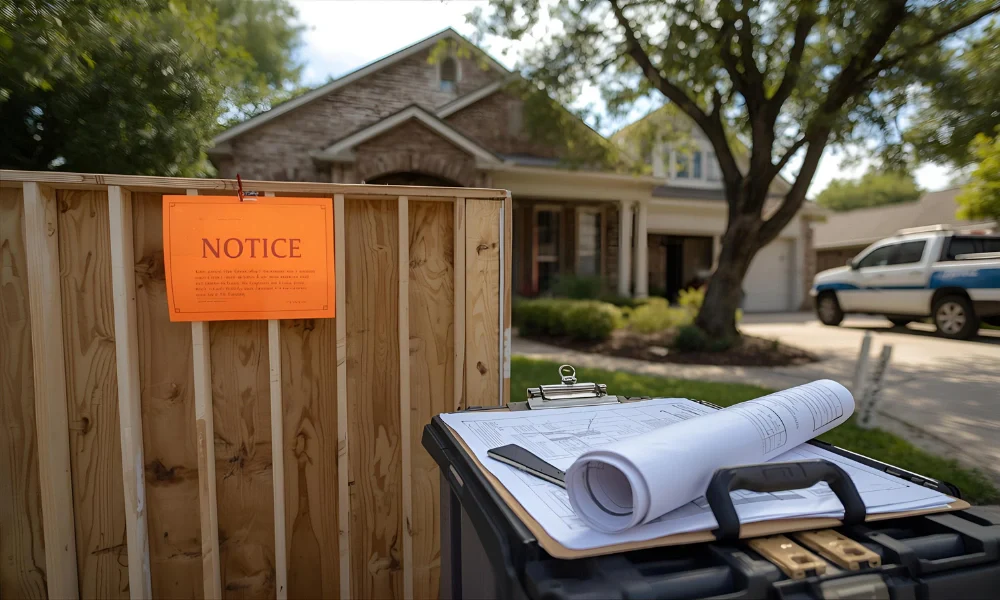
- When Permits Are Necessary: Permits are essential for most major remodels and are always required for structural changes (like removing a wall) and modifications to the plumbing or electrical systems. Even minor changes to a kitchen layout involving moving a sink or adding an outlet typically trigger a permit requirement.
- Inspections: The permit process includes mandatory construction inspections at key stages. This is one of those reality checks for HGTV-inspired remodel ideas. Your contractor’s team should manage the scheduling of these. Failing to pass an inspection or proceeding without a permit can result in costly stop-work orders.
What to do When Your Contractor Doesn’t Pull Permits?
While your contractor should handle the permits, the homeowner is ultimately responsible for ensuring a project is compliant with local codes. Work done without permits is unpermitted work, and the risks are significant:
- Stop-Work Orders and Fines: If discovered by a building inspector, the city or county can issue an immediate stop-work order, halting your project until permits are obtained. In Texas, penalties for building without a required permit can include a fine plus a triple permit fee.
- Demolition Risk: If the unpermitted work is found to be unsafe or not up to code, the local government can force you to demolish the unauthorized structure or work and rebuild it correctly.
- Insurance and Resale Complications: Unpermitted electrical or plumbing work can void your homeowner’s insurance coverage for any related damages (e.g., a fire caused by bad wiring). Furthermore, you are legally required to disclose renovations upon selling your home, and unpermitted work is a major red flag that can either kill a sale or force you to get costly retroactive permits.
Actionable Advice: Always ask your contractor for a copy of the approved permits before they start construction and verify their status with your local municipality.
The Importance of a Detailed Written Contract and Communication
A comprehensive written contract serves as your project blueprint and protection. It must clearly detail the following:
- Scope of Work: An itemized list of all work to be performed.
- Payment Schedule: Clearly defined milestones for payments. Always hold the final payment until the project is complete and you have received a final occupancy or inspection approval.
- Timeline: A projected timeline, ideally with provisions for delays (though rarely with legal bonus/penalty clauses unless agreed upon).
Excellent communication with your contractor is the best defense against surprises for full home remodeling. Regular meetings and clear, documented exchanges help your team manage the timeline and address issues promptly.
Conclusion: Turning Planning into Texas Project Success
The secret to a successful home renovation is simple: detailed planning is always cheaper than fixing mistakes in construction. Focus on these two foundational questions: What is your Budget? and What is your Project’s Purpose? This way, you create a resilient plan that minimizes stress and maximizes the long-term value of your Texas home.
Remember, a successful remodel involves more than just a beautiful design. It means securing appropriate financing, preparing a realistic contingency budget for surprises, and, most importantly, partnering with a vetted contractor who understands local permits and building codes.
Ready to take the next step? At Texas Pro Remodeling, we specialize in helping Texas homeowners turn their clear goals and carefully planned budgets into high-quality, functional, and value-driven living spaces.
Frequently Asked Questions (FAQs)
Does a general contractor need a state license in Texas?
No, Texas requires contractor registration and specific trade licenses (plumbing, electrical) at the local/city level.
What is the most critical part of the budget for a Renovation?
The contingency budget (typically 10-15%) is critical for covering unforeseen construction surprises.
What are the common reasons for a timeline delay in construction?
Timeline delays are commonly caused by late permit approvals, material sourcing, and unexpected structural surprises.
Why is contractor liability insurance so important?
Liability insurance protects the homeowner from financial responsibility if the contractor or a worker is injured on the project.
How can I manage dust and noise during remodeling?
Use temporary partitions or plastic sheeting to isolate the construction area and mitigate dust and noise disruption.
How should I compare different bids for my remodel?
Do not just look at the total price. Compare the scope of work line-by-line, scrutinize “allowances,” and ensure all major elements (like disposal) are included.
What is the best way to prevent costly “change orders”?
Define the project and select all materials in meticulous detail before signing the contract. Require all changes to be documented in a written, signed change order before any new work is performed.
Can a homeowner pull their own permits in Texas?
Yes, homeowners can often pull their own permits for their homestead, but certain plumbing and electrical work is restricted.