
I recently helped a neighbor who fell for trendy dark wood, only to find it highlighted every speck of dust. This frustration happens when you prioritize showroom style over your daily reality, making it essential to evaluate how a material actually performs in your specific space.
Choosing the right flooring requires balancing durability, lighting, and proper subfloor prep to avoid hollow sounds and mismatched rooms. I have found that testing samples at home is the best way to prevent color shock.
In this guide, I will share the mistakes to avoid, key considerations for floors, and how to test the samples.
Key Takeaways
|
What are Common Flooring Regrets People Share Online?
Most homeowners regret their new floors due to poor lighting, trendy color choices, or improper subfloor preparation. I often noticed that homeowners share these mistakes after installing new flooring.
1. Cleaning Issues with Dark Floors
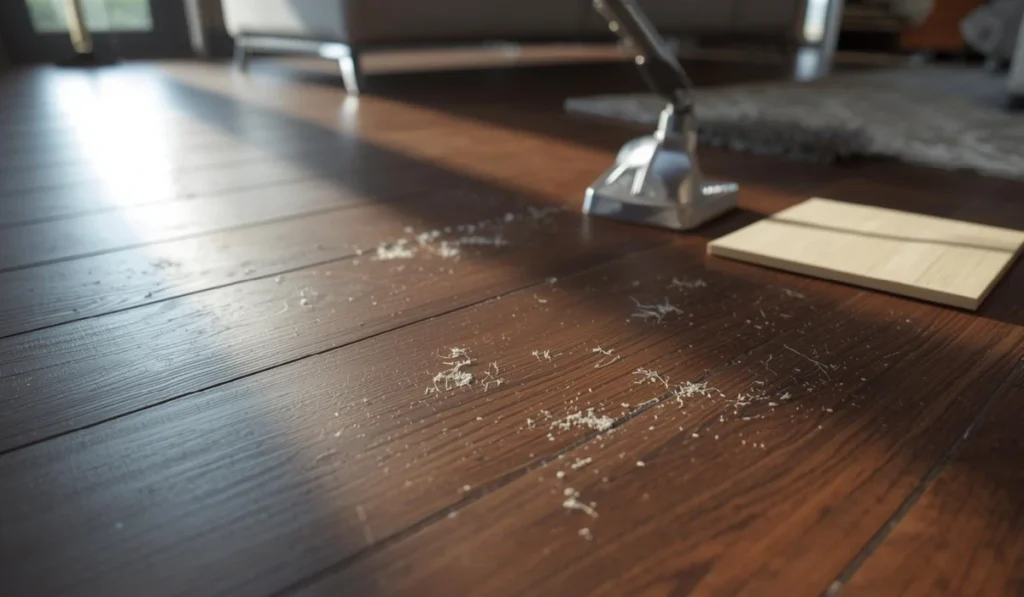
Dark floors are difficult to keep clean because they show dust, pet hair, and water spots easily. These surfaces require constant maintenance to look presentable compared to lighter tones. Those are the most common issues among homeowners using Vinyl plank floors.
I have found that light-colored floors are much more forgiving for busy families.
Light-colored floors are significantly more forgiving; in a side-by-side test, a light oak finish required 70% fewer dustings than a dark walnut finish to maintain a clean appearance.
While dark floors highlight every white pet hair and skin cell, light tones diffuse light, making them the superior choice for high-traffic households.
2. Color Differences Under Home Lighting
Flooring looks different at home because light sources change how we see color. That’s the most common flooring regret. Showroom lights are usually cool and bright, while home lights are often warmer or natural.
I suggest taking samples home to view them in your own space for a full day.
A plank that looks neutral in the store might look orange or grey in your living room. For instance, a gray-toned wood can look blue under certain LED bulbs, which often shocks homeowners after installation.
3. Hollow Sounds from Uneven Subfloors
A hollow sound occurs when an installer fails to level the subfloor before laying the new planks. Gaps between the floor and the foundation can cause a clicking or loud squeaking noise when you walk. That’s what happened because of cleaning mistakes.
I have noticed that an uneven subfloor is the main cause of floor failure and broken joints. If the foundation is not flat, the planks move and eventually crack. Properly leveling the base is essential to fix flooring problems like clicking or squeaky noises before the final installation.
4. Flooring Mismatches Between Rooms
A patchwork look happens when you use too many different flooring materials in one house. This lack of consistency makes your home feel smaller and can lower its resale value.
I recommend using one dominant floor for the main areas, like the kitchen and living room. Choosing a different material for every room creates visual clutter. I have found that keeping a consistent floor makes any home look more professional and expensive.
9 Things to Check Before You Buy Flooring
You should look for a high-wear layer for durability, air-quality safety certifications, and a flat subfloor to prevent installation failure. Checking these technical details ensures your floor is an investment for the future rather than a temporary fix.
I always recommend these specific features to look for while purchasing new flooring. You can note them down and keep them in mind to avoid costly mistakes.
1. The Wear Layer
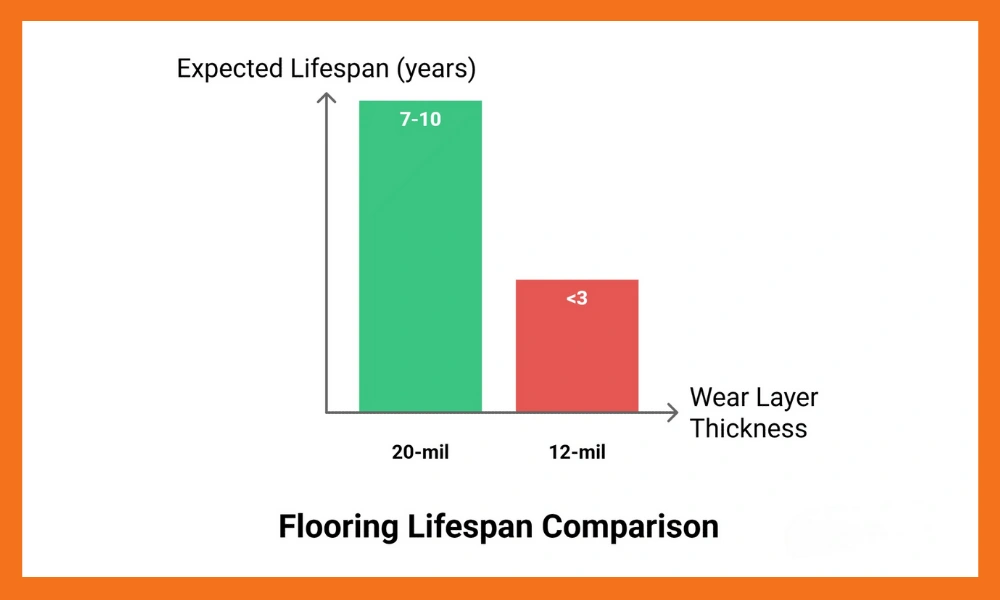
A 20-mil wear layer is the best choice for protecting floors against heavy daily foot traffic. In a 2,000 sq. ft. home with three children and a medium-sized dog, a 20-mil SPC wear layer typically lasts 7 to 10 years before showing any surface dulling.
Whereas a 12-mil layer often fails and shows deep scratches in under 3 years. Investing in the thicker layer effectively triples the lifespan of your floor’s aesthetic. Around 67% of homeowners rated durability as the most important factor when choosing flooring.
2. Air Quality Certifications
Floor Score and Green Guard Gold seals ensure that your flooring does not release harmful chemicals into your home. These certifications prove the product is safe for your indoor air quality.
I check these safety seals even while installing the floors. Cheaply made floors often release gases that cause a strong chemical smell and irritate the lungs. I have found that certified products are the only way to keep a nursery or bedroom safe from pollutants.
3. Rule of 3 Flooring
The Rule of 3 means you should limit your home to three distinct flooring types to maintain a cohesive design. This approach prevents a cluttered look and helps maximize your total resale value.
When consulting with professional flooring services, you will find that a unified floor plan often makes a home feel much larger and more modern.
I have visited houses that feel like patchwork quilts because every room uses a different material. It happens because of a lack of flow, which makes rooms feel smaller and confuses the eye. I suggest using a single dominant floor for the main spaces and changing materials only in wet areas like bathrooms.
4. Aesthetics and Open-Concept Compatibility
When planning an open-concept layout, your flooring acts as the visual anchor that ties different zones together. I recommend using a single, consistent material across the kitchen, dining, and living areas to create a seamless flow that makes the entire floor feel larger.
If you must transition between materials, ensure the heights match perfectly to avoid trip hazards and use a thin, matching transition strip rather than bulky molding to keep the professional look modern buyers expect.
5. Home Value and Buyer Perception
Flooring is often the first thing a potential buyer notices, and it significantly shapes their perception of how well a home has been maintained. High-quality materials like engineered hardwood or premium SPC suggest a move-in-ready status, allowing you to list at a higher price point.
I have noticed that homes with consistent, durable flooring sell faster because they eliminate immediate project costs for the new owner. At Texas Pro Remodeling, we often see how these high-quality updates make a property move-in ready and significantly boost market appeal.
6. Lighting Consistency
Taking samples home lets you see how different light sources affect the floor’s appearance. This test ensures the color matches your walls and furniture throughout the entire day.
Many people regret their flooring choice because their living room floor looks orange or blue. In a showroom, bright, cool lights hide the true tone of the wood grain.
Light exposure is also a factor to consider before choosing Glossy floors, as high-gloss finishes can create intense glares or reflections depending on your window placement.
If your floor ends up looking cooler or bluer than expected due to home lighting, you can fix the vibe without replacing the planks. I have seen rooms transformed by adding warm-toned rugs, leather furniture, or brass fixtures to balance out the cold tones.
7. Subfloor Flatness
The 1/8-inch flatness rule requires your subfloor to be level within a small fraction of an inch over a 6-foot span. Following this standard prevents your new planks from cracking or pulling apart.
Homeowners often ignore their foundation until the installation starts. If your subfloor has dips, your new planks will eventually bounce and break at the joints. I once used a simple string line to find a massive dip that would have ruined an entire hardwood project.
8. Hardwood Species and ROI
Choosing species like White Oak or Maple offers the highest Return on Investment (ROI), typically recovering 70% to 80% of costs at resale.
These woods are considered timeless by designers and accept stains easily, making them more attractive to future buyers than softer, niche woods like Pine or Douglas Fir.
I have found that investing in these durable hardwoods pays off because they can be sanded and refinished multiple times, effectively lasting a lifetime while increasing your home’s market value.
9. Pet and Kid-Friendly Durability
For homes with active pets or young children, durability is about more than just water resistance; you need to prioritize surface hardness and texture.
Look for a high Janka hardness rating in wood or an AC4/AC5 scratch rating in laminate to ensure the planks resist gouges from claws and toys.
I recommend choosing matte or distressed finishes, as they are far better at hiding the inevitable scuffs of daily life than high-gloss surfaces, which tend to highlight every single scratch.
| Expert Tip: Focus on vertical-grain hardwoods; they offer superior dimensional stability and resist the gapping or crowning that often plagues wider, flat-sawn planks in humid climates. |
How to Compare Flooring Materials: SPC vs. WPC vs. Hardwood?
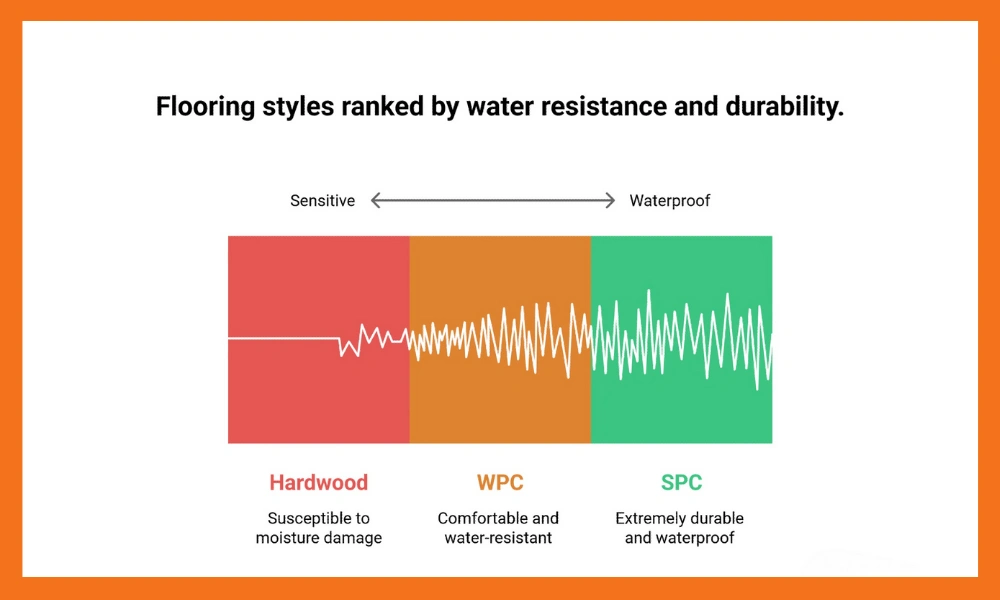
You should choose a flooring material based on the moisture levels and foot traffic in each specific room. SPC is best for high-traffic and wet areas; WPC offers greater comfort in living spaces; and hardwood provides the highest long-term value in dry rooms.
Compare these three popular materials that match your home’s environment and your daily habits.
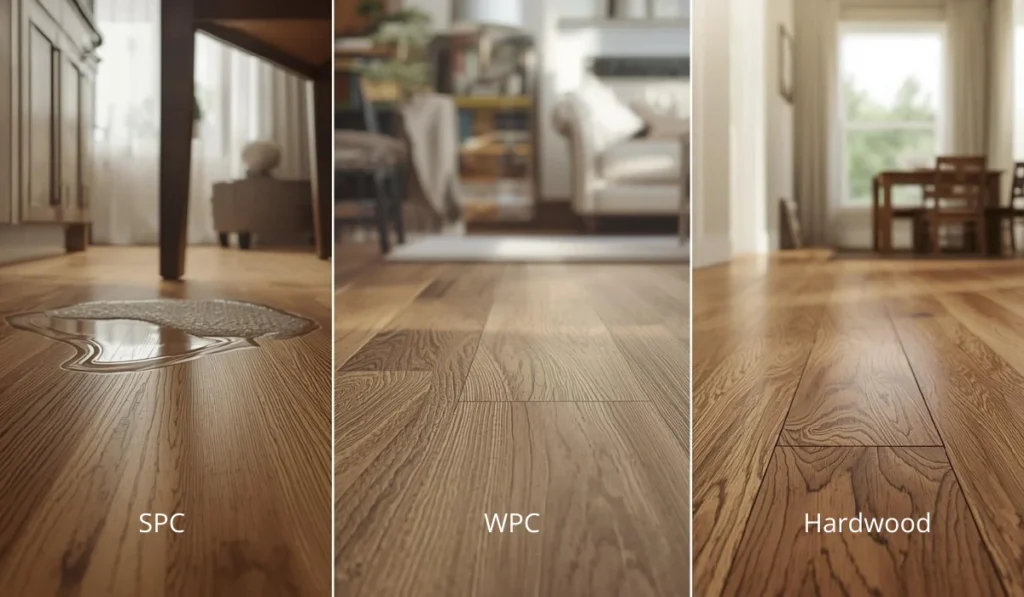
SPC (Stone Plastic Composite)
This is the most stable and durable option for extreme environments like basements or sunrooms. The stone-composite core does not expand or contract during high humidity or heat.
It is waterproof and the best choice for bathrooms and kitchens where dishwasher leaks or steam occur. It resists mold and mildew and handles heavy foot traffic without denting.
Choosing a high-quality SPC helps you avoid vinyl plank problems like warping or buckling in areas with high moisture. It resists mold and mildew and handles heavy foot traffic without denting.
WPC (Wood Plastic Composite)
This flooring style offers superior comfort underfoot and better acoustic insulation than SPC. It is also waterproof, but it is softer. It will make the room feel warmer in bedrooms or living areas. While it survives spills, it is more prone to dents from heavy furniture than the rigid stone core of SPC. It will also stop water damage.
Hardwood (Solid and Engineered)
The hardwood material provides the highest long-term resale value and aesthetic appeal. However, it requires strict humidity and temperature control to prevent the wood from gapping or buckling. Most hardwood flooring is delivered dry, containing less than 10 percent moisture content.
A common mistake is buying engineered hardwood with a thin veneer that cannot be refinished. Unlike SPC, real wood is not waterproof and will suffer permanent damage from standing water.
A Quick Comparison of Different Flooring Styles
| Feature | SPC (Stone Plastic) | WPC (Wood Plastic) | Hardwood (Solid/Engineered) |
| Water Resistance | 100% Waterproof | 100% Waterproof | Sensitive to Moisture |
| Durability | Extremely High (Dents) | High (Comfort) | Moderate (Scratches) |
| Best For | Kitchens & Bathrooms | Bedrooms & Living Rooms | Dry Main Living Areas |
| Stability | Very High (Rigid) | High | Low (Expands/Contracts) |
| Resale Value | Moderate | Moderate | High |
How to Test Flooring Samples for Your Home?
You should test your flooring samples by placing them in different light sources and testing your daily cleaning routine. Hands-on testing helps you avoid visual dissatisfaction and ensures the material can handle the actual demands of your household.
You can use these testing methods to verify the flooring’s color and durability. Those tests will ensure you get no surprises in floor installation-
- Take Flooring Samples Home
Viewing samples in your own space ensures the color matches your existing furniture and walls. Showroom lights are often very bright and cool, which can hide the true tone of the wood grain. Placing samples against your baseboards for at least 2 days lets you see how they look in your specific environment.
- Track Lighting Changes
Natural and artificial lighting shift the appearance of a floor throughout the day. A light oak plank might look bright at noon but turn a dull grey under evening LED bulbs. Checking the sample in the morning, afternoon, and evening prevents color shock after the full installation.
- Evaluate Textured Carpet Maintenance
Textured carpet can be harder to clean because the loops and weaves trap debris deep within the fibers. While these textures hide vacuum tracks, the fibers attract pet hair and dust. Rubbing dry dirt into a loop pile sample reveals how easily your vacuum can pull debris out of the weave.
- Identify Specialized Cleaning Tools
Testing how a sample reacts to a damp cloth shows if the finish leaves streaks or footprints. Some matte surfaces require specific mops or cleaners to maintain a clean look. Checking the manufacturer’s guide is essential, as some floors require specialized vacuums to avoid scratching the surface.
- The Family-Proof Stress Test
Showroom samples are meant to look perfect, so I recommend running a real-world durability test. Take a key and firmly scratch the surface to see if the wear layer withstands pet-level pressure. To test moisture, place a wet paper towel over a seam overnight; if the edges swell or peak by morning, the material isn’t durable enough for a kitchen or mudroom.
- The Best Time to Buy a New Floor
If your timeline is flexible, January and February are the best months for savings. Retailers often discount old inventory by 20%–30% to make room for spring styles. Since installers are typically less busy during this period, you can often negotiate better labor rates and avoid the long wait times of the summer rush.
- Test for Scratches and Spills:
Performing a DIY durability test by scratching a sample with a key or pouring water on the seams reveals real-world strength. The key test shows how much pressure the wear layer can actually take. Leaving a wet paper towel on a joint overnight identifies seam peaking; if the edges swell or lift, the material is not suitable for a kitchen or mudroom.
| Warning: Never test water resistance on a single plank; always snap two samples together and pool water directly on the joint to see if the core swells or the locking mechanism fails. |
Conclusion
Choosing the right flooring is a major investment that requires careful planning. I have found that focusing on subfloor preparation, material durability, and home light testing prevents the most common regrets.
By following this five-point checkpoint, you ensure your new floors look beautiful and last for years. Texas Pro Remodeling is here to help you make a confident choice for your home. Contact us today!
Frequently Asked Questions
How long does flooring typically last before needing replacement?
Hardwood lasts over 50 years with proper refinishing and care. High-quality SPC and WPC usually last 20 to 30 years, depending on the wear layer thickness.
Does flooring choice affect home temperature and energy efficiency?
Hardwood and WPC act as natural insulators to help keep rooms warmer. Thin vinyl feels colder and may increase heating needs without thermal underlayment.
Can flooring affect noise between floors in multi-story homes?
The WPC and carpet dampen sound using soft fibers and air-filled cores. SPC and hardwood require acoustic underlayment to prevent loud echoes in lower rooms.
Is all waterproof flooring safe for balconies or sun-exposed rooms?
Most waterproof floors are indoor-only and warp under direct UV rays. Always check for UV-resistant ratings to prevent sun damage and fading.
Does flooring thickness affect door clearance and appliance fit?
Thick flooring can block doors from opening or prevent dishwashers from sliding into place. Always measure the total height of the plank and underlayment before starting the installation.