
I once watched a friend’s $20,000 renovation get demolished by mold remediation teams due to one tiny waterproofing error hidden behind the wall. It was a heartbreaking sight watching a dream space turn into a toxic money pit. That experience changed my perspective on renovations.
A bathroom should function like a high-performance machine while looking like a spa. I’ve analyzed the technical failures that ruin homes to keep your project safe.
Here you will find the blueprint to avoid structural traps, ensuring your new bathroom is built for long-term survival and lasting style. Let’s dive into the essential steps to make sure your remodel is done right the first time.
Key takeaways
|
1. Why the Invisible Foundation is Your First Priority
If you are wondering where to start bathroom remodeling, the answer is always behind the wall. You must thoroughly check the following before working on the bathroom.
- The most critical part of any project is the wet area preparation, specifically waterproofing, plumbing, insulation, and the 24-hour flood test. You should take this in account 1st in your bathroom remodel inspection.
- Stable internal structures keep your surface finishes beautiful for years.
- Focusing on the guts of the room prevents catastrophic leaks and noise issues that occur after the walls are closed.
- For example, I always recommend a 24-hour flood test. Plug your shower drain and fill the pan with water before tiling. If the water level stays the same for a full day, your pan is perfectly sealed.
This simple check saves you from expensive future repairs before the tile is even laid.
2. Designing Practical Layouts That Actually Work
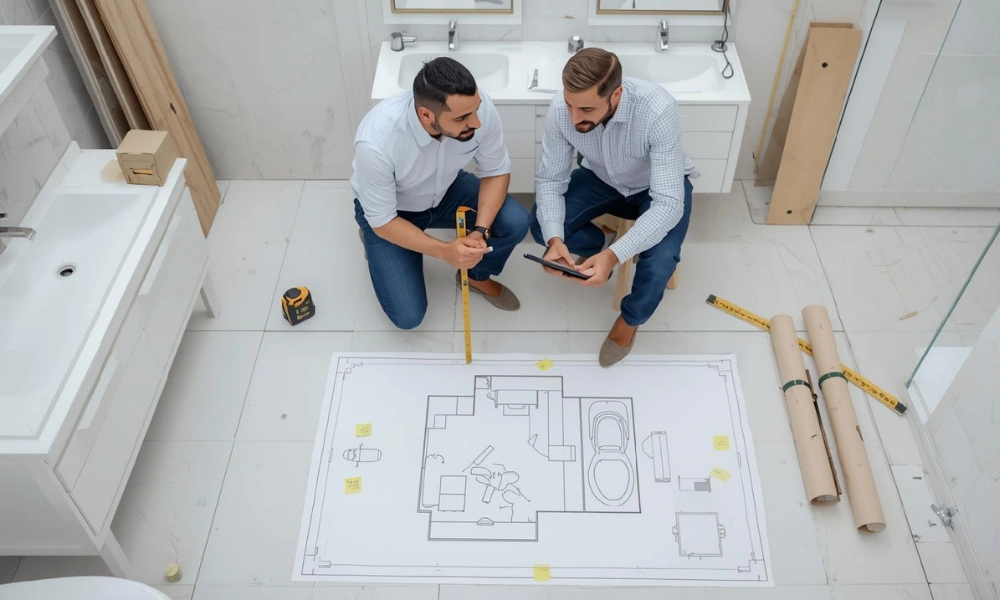
When researching different ways to update your bathroom, it is easy to get caught up in aesthetics, but successful layouts must prioritize clearance zones around fixtures to ensure the room feels spacious and meets safety codes.
I believe a beautiful bathroom is useless if you feel cramped. Small design changes, like adjusting the distance between a toilet and a vanity, make the biggest difference in your daily comfort.
While the International Construction Code (ICC) requires only 15 inches of space from the center of the toilet to the wall, I suggest you aim for 18 inches. This Elbow Room Rule prevents you from hitting your arms on the cabinet while sitting down.
3. How to Avoid the Hidden Waterproofing Gap
One of the most vital tips to consider when remodeling your bathroom is to never rely on cement backer board alone; you must apply a dedicated waterproof sheet membrane to protect your studs from moisture and mold.
Without this layer, steam and splashes can migrate through the grout, eventually requiring extensive water damage restoration for the home’s subfloor and framing.
Many homeowners think cement board is waterproof because it doesn’t rot. This is a myth that it is water-stable, but it will let moisture pass through to your wooden framing.
I suggest using a sheet membrane system (like Schluter-Kerdi) to create a sealed, bathtub-like environment behind your tiles.
4. How to Silence the Waterfall Sound Effect
When homeowners remodel their bathrooms, they often overlook the sounds that happen inside the walls until the first time they flush a toilet. You can stop loud plumbing noises by insulating your drain lines with acoustic foam or replacing PVC with cast-iron pipes.
Standard PVC pipes act like a megaphone for rushing water. If you don’t want to hear a loud whoosh in your dining room whenever someone flushes upstairs, you need to dampen the vibration of the drain stack.
Using cast iron for vertical drain stacks is a pro-level move; it naturally silences the sound of water without requiring extra bulky insulation.
5. Maximizing Space for Modern Technology and Doors
While everyone loves a dramatic bathroom remodel before and after photo, the real success is measured by how the room functions with modern technology.
Smart technology is no longer a luxury extra. However, smart toilets currently hold a dominant 58% share of the smart bathroom market.
This means accounting for arcs of conflict regarding door swings and providing 5 inches of floor clearance for robot vacuums. If you want a robot vacuum to clean for you, get a floating vanity.
Ensure there is at least a 5-inch gap underneath so the vacuum does not get stuck in a dark corner or under the plumbing lines.
6. How to Survive a One-Bathroom Renovation
If you are planning to stay while remodelling the bathroom, then survive a gut-remodel by using a bucket-flush method for sanitation and negative air pressure to isolate construction dust. Keeping the air clean is vital; professional drywall repair can easily fix any wall changes caused by moving old, heavy fixtures.
To manage dust, seal your AC vents and put a fan in the bathroom window, blowing outward. This creates negative pressure, pulling dust out of the home.
For the toilet, keep a 5-gallon bucket of water nearby; pouring it quickly into the bowl creates a manual siphon that flushes waste even with the water lines disconnected.
7. Selecting Electrical Loads and Durable Cabinet Materials
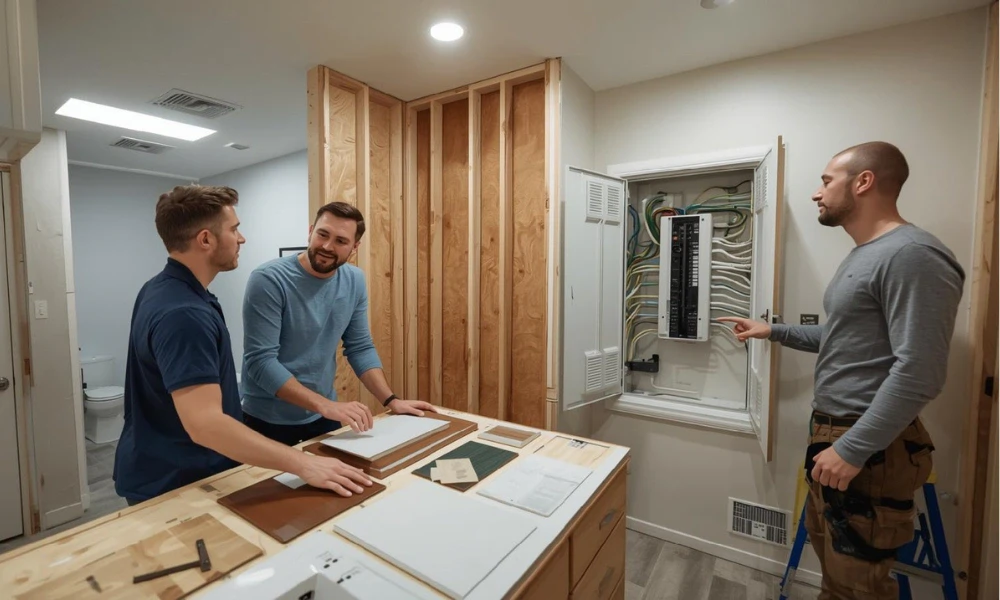
Use a dedicated 20-amp circuit for bathroom outlets and choose plywood vanities to withstand high humidity.
Modern bathrooms require high electrical capacity for hair dryers, curling irons, and heated floors. A dedicated circuit keeps your power steady and reliable. Since moisture is tough on wood, the material you choose determines the lifespan of your vanity.
At Texas Pro Remodeling, we have found that real plywood is the only material that truly stands up to the humidity of a modern master bath
8. Avoiding the Valve and Trim Compatibility Trap
Ensure your shower rough-in valve and trim kit match by purchasing them from the same manufacturer at the same time. Shower valves vary significantly by brand.
Buying the Valve + Trim as a matched set from a single brand keeps your project moving smoothly. This prevents delays and ensures every piece fits together perfectly for a flawless finish in bathroom remodeling.
9. Improving Light Quality with High CRI Standards
When calculating what value a bathroom adds to your home, light quality is a major factor in buyer perception.
Lighting has officially become a design priority; around 96% of design experts agree that lighting quality is the most important consideration in bathroom design.
For the most accurate reflection, install LED fixtures with a Color Rendering Index (CRI) of 90 or higher.
A high CRI ensures that your makeup and skin tone look the same in your bathroom as they do in natural sunlight. It is the difference between a utility bathroom and a luxury dressing room.
10. Future-Proofing with Universal Design
Modern luxury is defined by inclusivity. Universal design ensures your bathroom works for everyone, from young children to seniors, without looking clinical.
I suggest installing zero-threshold showers (where the floor is flush with the shower) and integrated grab bars that double as towel racks.
These features aren’t just for accessibility; they create a seamless, high-end look and significantly increase your home’s resale appeal to the widest possible range of buyers.
11. The Hidden Storage Revolution
One of the most common regrets after a remodel is a lack of storage for daily essentials. To keep your counters clear, look for vertical real estate.
I recommend creating recessed niches between the wall studs, not just in the soap shower, but near the vanity for toothbrushes and skincare.
Additionally, choose vanities with U-shaped drawers that wrap around the plumbing. This allows you to use the space typically wasted under the sink, giving you 30% more usable storage in the same footprint.
Instead of a cluttered countertop, imagine a power-equipped vanity drawer where your hair dryer and electric toothbrush stay plugged in and hidden. This allows two people to get ready simultaneously without a tangle of cords or crowded surfaces.
12. The Structural Check: Subfloor Reinforcement
Before the first tile is laid, you must confirm your floor can handle the weight of modern luxury.
- If you are moving from a standard tub to a heavy cast-iron soaking tub or installing large-format stone tiles, your existing floor joists may require extra support.
- Before the first tile is laid, you must confirm your floor can handle the weight of modern luxury. If you are moving to a heavy cast iron soaking tub or large-format stone tiles, your contractor must calculate subfloor deflection.
- If the subfloor flexes too much, your new tiles and grout will eventually crack. Strengthening the subfloor now is the only way to ensure your beautiful finish lasts a lifetime.
Strengthening the subfloor now is the only way to ensure your beautiful finish lasts a lifetime.
13. Protecting Your Investment with Active Ventilation
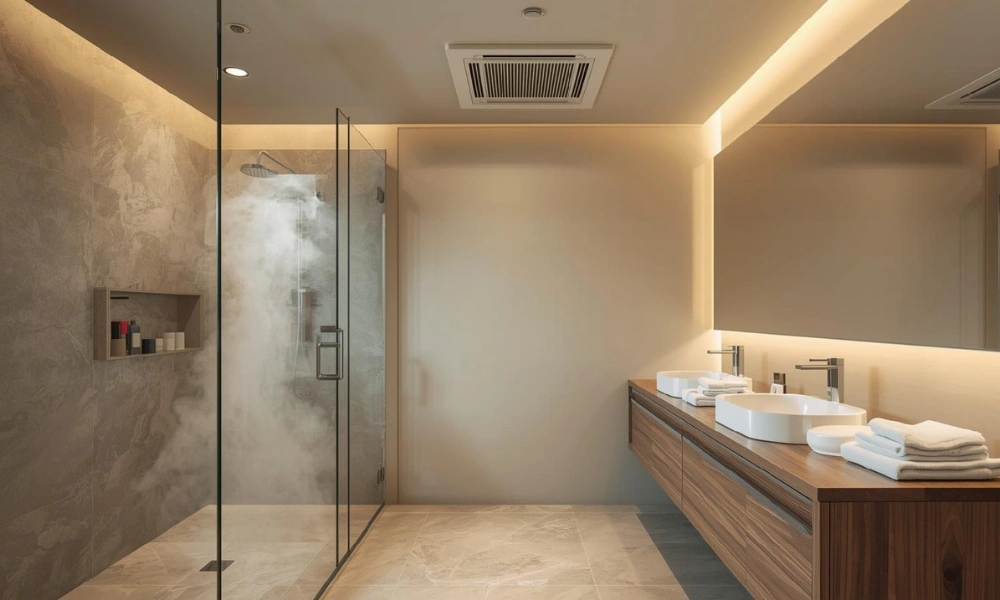
High humidity causes peeling paint and warped cabinets. Follow these tips for an active ventilation system-
- To maintain a dry environment, install a High-CFM exhaust fan with a built-in humidity sensor.
- These “smart” fans activate automatically when steam rises, ensuring the room remains dry even if someone forgets the switch.
- Choose a model with a Sone rating of 1.0 or lower for a whisper-quiet experience that preserves your bathroom’s spa-like peace.
14. The Final Quality Punch List for Homeowners
Before you finalize your project, use these professional quality-control checks to ensure your bathroom is built to last.
- Use the Credit Card Test for tile leveling and use flexible silicone sealant in the corners. Before you make the final payment, verify the quality of the finish.
- Slide a credit card across your new floor. A smooth transition across tiles indicates a perfect installation.
- Ensure corners use flexible silicone, which moves with your house to stay waterproof, whereas rigid grout tends to crack over time.
Move from Paper to Projects. Team up with Texas Pro Remodeling.
A bathroom remodel is about more than a new look—it’s about peace of mind. By prioritizing the guts of the room and respecting the technical requirements of water and space, you protect your home’s legacy and your family’s comfort.
If you’re ready for a project that combines world-class style with rock-solid engineering, we are here to help. Contact us today to book your expert consultation and ensure your renovation is built right from day one.
Frequently Asked Questions
When can I shower after my bathroom is tiled?
Wait at least 72 hours for the silicone sealant to chemically bond and dry completely. Using it too early can cause leaks behind the walls.
Do I really need a permit for a bathroom remodel?
Yes. Skipping permits can void your home insurance and make it very difficult to sell your house later. Unpermitted work is often flagged during home inspections.
What is the 30% Rule in bathroom remodeling?
The 30% Rule suggests setting aside 30% of your total budget as a contingency fund. This covers “hidden” costs like mold remediation, structural repairs, or plumbing upgrades discovered during demolition.
Which tile is safest for a bathroom floor?
Avoid polished or shiny tiles. I always tell my clients to go with a matte or honed finish for safety, as they provide much better traction when wet.
What is a realistic bathroom remodel budget in 2025?
Most homeowners spend between $12,000 and $25,000 for a full guest bathroom. Primary master suites with luxury features typically range from $35,000 to $75,000.