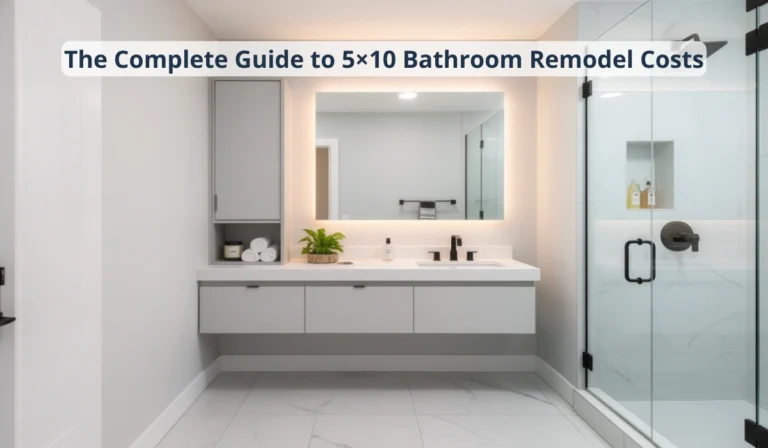



You might be in a small bathroom, about 50 square feet, thinking about how to change it without spending too much money. Here’s the answer to your question: A 5×10 bathroom remodel in 2026 usually costs between $5,000 and $35,000 or more.
Most homeowners spend around $12,000 to $18,000 for a good mid-range renovation.This guide will tell you when and where to start your bathroom remodel & your final cost depends less on square footage and more on how much you’re willing to change. Before we get into that, let’s look at why a 5×10 bath remodel is worth the investment.
TL;DR:
|
Why 5×10 Bathrooms Are Worth Remodeling
5×10 bathrooms are common in many homes. They often act as hallways or guest baths with a small 50-square-foot layout. Their size makes them perfect for impactful changes that don’t need a lot of space.
Did you know?
A remodeled 5×10 bathroom is more than just good for resale. It can save water by 20% with efficient fixtures, lower your utility bills, and improve your mood. Adding spa-like features, such as better lighting, can help reduce stress.
A remodel can change daily routines. A tidy area that makes morning prep easier or impresses guests with its modern look. These improvements can boost your home’s value by 60-80% of your investment, particularly in active markets.
For instance, adding storage like built-in shelves can make the room feel much larger, helping families or remote workers find a quick refresh spot.
5×10 Bathroom Remodel Cost For Different Remodel Types
Small bathrooms require careful choices. With limited space, every decision from fixtures to layout can greatly impact your budget. Recent data shows that a typical 5×10 bathroom remodel costs between $12,000 and $16,500.
However, you can spend as little as $7,500 for basic updates or over $25,000 for high-end options. Your location matters too; if you live in a city, labor costs can increase by 10-20%. If you keep the plumbing and walls in place, you might save up to 30% on the total cost.
Here’s a quick summary table to set expectations:
| Remodel Type | Typical Cost Range (2026) | Main Features |
| Basic | $7,500–$15,000 | Fresh paint, new fixtures, stock vanity, minor updates like lighting |
| Mid-Level | $15,000–$25,000 | Walk-in shower conversion, upgraded vanity, quality tile and flooring |
| Luxury | $25,000+ | Custom cabinets, heated floors, high-end materials like natural stone |
Layout stability isn’t just about saving money; in older homes, preserving the original plumbing footprint can avoid costly surprises like outdated pipes, potentially adding $2,000-$5,000 in repairs.
How Remodeling Scope Impacts Your Costs
Your project’s size greatly affects costs. So, it’s important to balance your goals with your budget. A simple update is easy and cheap, while a complete overhaul requires more planning.
Light Refresh ($7,500–$15,000):
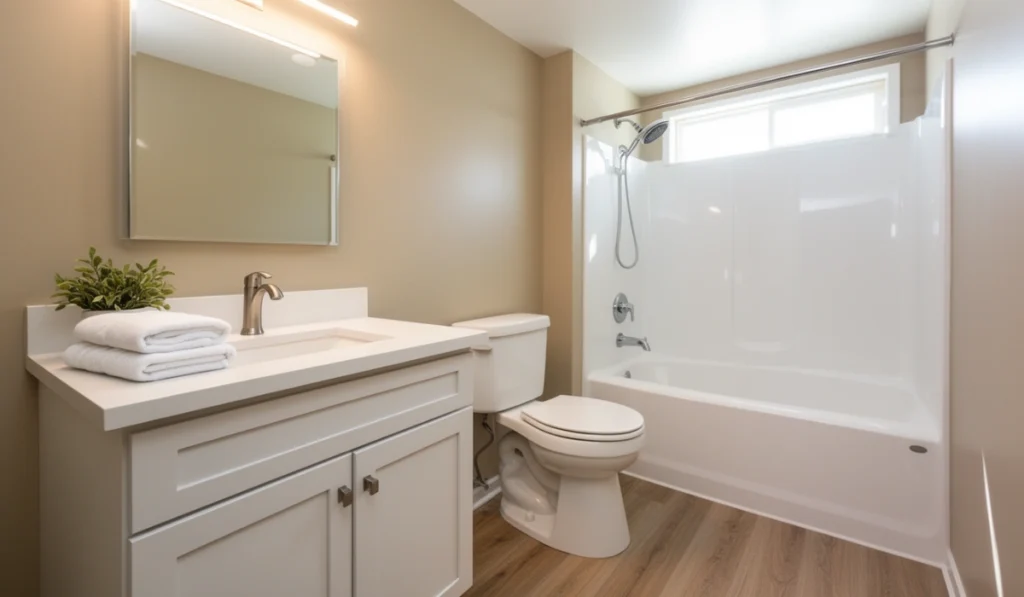
Focus on simple changes like replacing old fixtures, painting walls in popular neutral colors, and updating hardware. For example, refinishing a tub instead of replacing it can save over $1,000.
A refresh keeps everything in place but improves the look. You won’t move walls, replace the tub, or change the plumbing. If you want simple ways to update your bathroom, this method gives great results with little hassle.
What’s included:
- Fresh paint in a modern, moisture-resistant finish
- New vanity with a stock countertop (typically 24–36 inches)
- Updated faucet and showerhead
- New toilet (standard two-piece)
- Mirror and lighting fixtures
- Possibly new vinyl flooring if the existing is damaged
Best for: Homes with a good layout and working fixtures that just need a fresh look. This is also great if you plan to sell in the next two years and want to make a big impact without spending too much.
Trade-offs to understand: You have to keep the current layout. If your space feels small or poorly arranged, a simple update won’t solve those issues. You’ll just have a nicer-looking version of the same problems.
Mid-Level Upgrade ($15,000–$25,000):
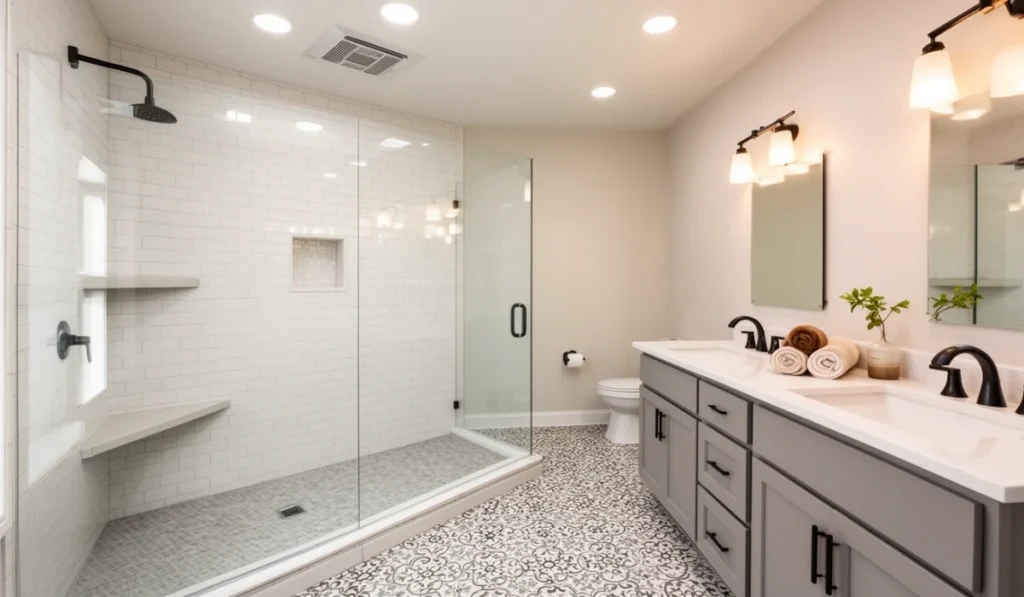
Add practical changes like a new vanity with quartz countertops, a tiled walk-in shower, and strong flooring. For example, changing a tub-shower combo to a curbless shower makes it easier to access and looks modern.
You can make important updates without going all out on custom work. Using these good tips to consider when remodeling your bathroom will help you maximize value at this price point.
What’s included:
- All of the above, plus:
- Potential tub-to-shower conversion or upgraded tub
- Better tile—maybe subway tile on walls or a patterned floor
- Higher-quality vanity with granite or quartz countertop
- Updated exhaust fan with humidity sensor
- Possibly a niche or shelving in the shower
- Better lighting with dimmers and separate vanity lights
Best for: Homeowners who plan to live here for 5–10 years and want to enjoy their space daily while also getting good resale value. This is also a good choice for rental properties because quality can attract better tenants.
Trade-offs to understand: You will likely keep the current layout, but you can make some changes within that space. If you want a bigger vanity, you may lose some floor space. If you prefer a larger shower, the tub might need to be smaller.
Full Gut Remodel ($25,000+):
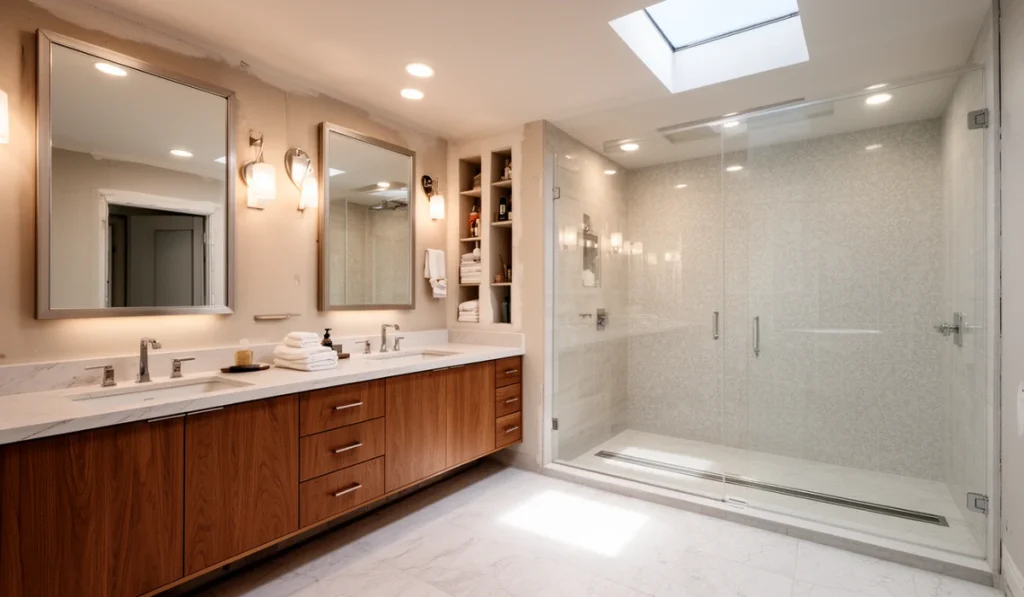
Remove everything and change the layout for better flow, using high-quality finishes like custom woodwork. For example, you might move the toilet to fit a double vanity in a family home.
This approach changes everything. You will take it down to the studs and rethink the space. If you calculate that then you would know why DFW homeowners remodel their bathrooms is important when planning this kind of change.
What’s included:
- Complete demolition of everything
- Potential layout changes (moving walls, relocating plumbing)
- Custom or semi-custom cabinetry
- Premium tile work with intricate patterns or large-format tiles
- Heated floors
- Curbless shower with linear drain
- High-end fixtures from brands like Kohler, Grohe, or Waterworks
- Recessed medicine cabinets and custom storage solutions
- Possibly adding a window or skylight
This is best for homeowners who plan to stay long-term and want their dream bathroom, or those facing big problems like rot, mold, or old wiring that need a full remodel.
Cause you will spend a lot more money, and you might not get it all back when you sell. But if you are staying, the daily happiness could make it worth it.
| Category | Percentage of Total Spend | Example Amount ($20,000 Budget) |
| Labor | 40-60% | $8,000–$12,000 |
| Materials | 20-30% | $4,000–$6,000 |
| Fixtures & Appliances | 15-20% | $3,000–$4,000 |
| Permits & Misc. | 5-10% | $1,000–$2,000 |
Budget vs. Ambition Trade-offs
If your budget is tight, prioritize high-use areas like the shower (40% of daily interaction) over luxury add-ons. Readers often overspend on trends that don’t align with needs, leading to regret.
Materials That Can Make or Break Your Budget
The materials you choose will greatly affect your costs and how happy you are in the long run. Let’s look at different options so you can decide wisely. Because each option can completely change the before-and-after bath remodel view.
Flooring Options
| Material | Provided Cost/Sq Ft (Installed) | Verified 2026 Cost/Sq Ft (Installed) | Durability | Maintenance | Best Use Case |
| Luxury Vinyl Plank | $3–$8 | $3–$12 (mid-range: $4–$8) | High | Very Low | Budget-friendly, water-resistant, great for DIY |
| Porcelain Tile | $5–$15 | $9–$35 (common: $12–$25) | Very High | Moderate | Long-lasting classic, endless style options |
| Ceramic Tile | $4–$12 | $7–$25 (common: $10–$20) | High | Moderate | Similar to porcelain but slightly less durable |
| Natural Stone | $10–$30 | $10–$35 (premium: $20+) | Very High | High | Luxury look, requires sealing, can stain |
| Heated Floor Add-On | $5–$12 extra | $6–$15 extra (common: $8–$12) | N/A | Low | Luxurious comfort, worth every penny in cold climates |
Smart Strategy Update:
Heated floors are a great choice. They cost $500–$800 for a typical 40–60 sq ft bathroom. This upgrade adds comfort and helps with resale value.
Shower Walls and Surrounds
| Material | Provided Cost (Installed) | Verified 2026 Cost (Installed) | Durability | Maintenance | Aesthetic |
| Fiberglass | $500–$2,000 | $400–$2,000 (basic kits: $770–$960) | Moderate | Low | Basic, can look dated |
| Acrylic | $900–$3,000 | $500–$2,500 (seamless: $1,000+) | High | Low | Clean, seamless, good value |
| Solid Surface | $1,500–$4,500 | $1,500–$3,500 (premium: $40–$70/sq ft) | High | Very Low | Sleek, modern, seamless |
| Cultured Marble | $2,500–$5,500 | $700–$4,500 (walls: $1,280–$2,180 avg) | High | Low | Classic, seamless, upscale look |
| Tile | $3,000–$8,000+ | $2,700–$8,000+ (custom: $15–$50/sq ft) | Very High | High | Flexible, timeless, grout requires care |
Budget-Friendly Tip Update:
Mixing tile accents with solid surface or acrylic is still a solid strategy, potentially saving 20–30% while maintaining a custom feel.
Countertops
| Material | Provided Cost/Sq Ft Installed | Verified 2026 Cost/Sq Ft Installed | Durability | Maintenance | Best For |
| Laminate | $20–$50 | $20–$60 (avg: $35–$42) | Moderate | Low | Budget projects, rental properties |
| Quartz | $60–$120 | $40–$120 (common: $50–$100) | Very High | Very Low | Durability, no sealing, consistent look |
| Granite | $50–$150 | $50–$140 (avg: $97–$141) | High | Moderate | Natural beauty, each slab unique |
| Marble | $100–$250 | $60–$150 (premium: $100+) | Moderate | High | Luxury look, needs careful maintenance |
| Butcher Block | $40–$80 | $50–$150 (avg: $67–$94) | Moderate | High | Warm look, needs sealing, can warp |
Worth Noting Update:
For 6–10 sq ft, upgrading to quartz ($600–$1,000 added) is still a smart splurge for transformation without major budget impact.
Vanities
Stock and semi-custom options fit basic models well, but custom ones work better. In 2026, expect small price increases for solid wood or integrated tops because of material costs.
- Stock Vanities: $200–$600 (verified: $300–$900 basic; avg install $576–$871 incl. unit)
- Semi-Custom: $800–$2,000 (verified: $500–$1,600)
- Custom Built-Ins: Start at $2,500 (verified: $3,000–$6,000 mid-range; up to $10,000+ premium)
A 30–36 inch vanity with soft-close drawers and a quartz top from a specialty store ($800–$1,200) remains ideal for quality and longevity.
Labor Costs & Hidden Surprises
Labor typically eats up 40–60% of your budget, driven by skilled pros like plumbers ($85–$175/hour) and electricians ($60–$145/hour). Hidden issues, such as mold or faulty wiring, can add $1,000–$5,000 unexpectedly.
| Labor Type | Estimated Cost (2026) | Notes |
| Demolition | $500–$1,500 | Varies by materials; includes disposal |
| Plumbing | $3,000–$8,000 | Higher for relocations or upgrades |
| Electrical | $800–$2,500 | For lighting, outlets, and venting |
| Installation | $2,500–$6,000+ | Tile and fixture work depends on complexity |
Tips for Negotiating:
Get multiple bids (aim for 3-5), ask about bundled services, and schedule off-peak (winter) for 10-15% savings. Pre-remodel inspections ($300–$500) can spot issues early.
Design Complexity: When Custom Features Add Up
Custom features can improve a 5×10 space but increase costs. Floating vanities cost $1,500 or more, and smart lighting ranges from $500 to $1,000. These require skilled workers. Complex tile designs can raise installation costs by 20%.
High-value features like heated floors offer a 70% return on investment, while low-impact options like fancy hardware return less than 50%. If you use the bathroom every day, invest in comfort. For guest use, keep it simple.
Permits, Inspections, and Legal Requirements
Always obtain permits because they ensure safety and resale value. Permits cost $200–$1,500 depending on location.
When you need a permit:
- Moving or adding plumbing
- Electrical work beyond swapping fixtures
- Structural changes (removing walls, adding windows)
- Changing the bathroom’s footprint
When you might not need one:
- Replacing fixtures in the same location
- Painting and cosmetic updates
- New vanity (if plumbing isn’t moved)
Look up local rules online. Set aside money for inspections ($100–$300 each). Let the pros like Texas Pro Remodeling take care of permits. In coastal states like CA, expect extra fees for energy compliance.
Budgeting Strategies and Cost-Saving Tactics
Smart homeowners plan their 5×10 remodel carefully. Knowing how much a bathroom adds to your home helps you decide where to spend and where to save.
Here’s Step-by-step how to budget:
Keep the Layout
Keeping the layout the same saves the most money. Moving plumbing costs $500 to $1,500 per foot. Relocating an electrical outlet adds $200 to $400. If you don’t move anything, you can save thousands.
Refinish Instead of Replace
- Tubs: Reglazing a tub costs $400–$600, while replacing it costs $1,500–$3,000. If your cast iron tub is in good condition, refinishing can add 10–15 years of use.
- Vanities: You can paint your cabinets, add new handles, and put on a new countertop. This will cost $500–$1,000 compared to over $2,000 for a brand-new vanity.
- Tile: If the tile is dated but sound, consider professional cleaning and new grout. It’s amazing what fresh grout can do.
Prioritize High-Impact Areas
In a 5×10 bathroom, guests see three main things first:
- The shower or tub
- The sink and counter
- The floor
Invest your money here. Save on items like the toilet (a $300 model works well) or simple accessories.
Smart Material Choices
- Use large-format tiles (fewer grout lines, easier installation)
- Choose stock cabinet sizes over custom
- Pick mid-grade fixtures from reputable brands
- Consider prefabricated shower pans instead of custom tiled pans
Return on Investment & Long-Term Value
Mid-range remodels recoup 60-80% at resale, with showers and flooring yielding the best bang. Luxury? Around 40-50%.
| Upgrade Type | Avg. Cost | Est. ROI | Value Added |
| Shower | $3,000–$8,000 | 70-80% | High usability |
| Flooring | $500–$1,500 | 60-70% | Durability boost |
| Vanity | $1,000–$3,000 | 50-60% | Storage appeal |
Did you know?
In 2026, eco-friendly upgrades like low-flow fixtures add 10% extra ROI in green markets.
Remodeling Logistics & Planning Ahead
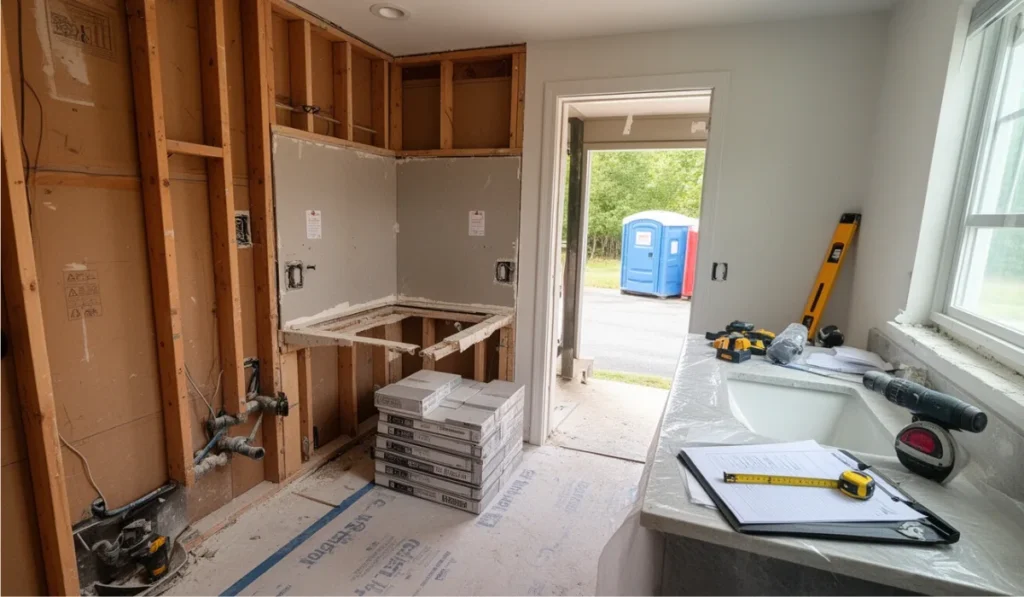
Knowing common bathroom makeover mistakes can help you avoid problems. Here’s how to manage the chaos: Rent a portable toilet for $100 a week or ask a neighbor to use theirs. It will take 2 to 4 weeks for a mid-level project. Key steps are
- Demo (Days 1-2)
- Rough-ins (Week 1)
- Finishes (Weeks 2-3)
Tips:
- Weekly contractor check-ins
- Staged payments (30% start, 30% mid, 40% end)
- Stock up on essentials
- Planning alternate bathing spots is often overlooked, leading to added stress.
Conclusion
Remodeling a 5×10 bathroom in 2026 means balancing your budget and style. Costs can be as low as $5,000 for simple updates and up to $35,000 for luxury options. The size of the project and the materials you choose will affect the final price.
Texas Pro Remodeling is here to help you reach your home goals clearly. Your new bathroom will add comfort and value to your home for years. Contact our team today to start your custom design and budget plan.
FAQ
How long does a 5×10 bathroom remodel take?
2-6 weeks, depending on scope—basics in 1-2 weeks, full guts 4-6.
Can I remodel without moving plumbing?
Yes, it saves $2,000–$5,000; focus on cosmetic swaps.
Best upgrades for a small bathroom?
Walk-in shower, floating vanity, and LED lighting for space illusion.
Permit requirements in different states?
Varies—CA needs energy audits; TX is simpler for minors. Always check local.
Can a 5×10 fit a double vanity or tub/shower combo?
Yes, with a smart layout, a 36″ vanity is possible; the combo fits if optimized.
How to plan a remodel around living in the home?
Phase work, use temp setups, and communicate daily with the crew.