
In Dallas, new hardwood floors can develop gaps, cupping, or peaking because the wood is reacting to extreme humidity or moisture from the concrete slab.
I have seen beautiful floors ruined because installers ignored North Texas weather or failed to properly test the foundation’s moisture levels.
To prevent this, you must control your indoor climate and ensure a professional moisture barrier is in place. Sounds overwhelming, right? I have noted down the causes of floor problems in Dallas weather and how to prevent them effectively.
Key Takeaways
|
Why Dallas Weather Is Tough on Hardwood Floors?
Dallas weather causes hardwood floors to fail because the extreme shifts in humidity and soil pressure force wood to move beyond its natural limits.
These environmental stresses create a perfect storm that leads to common flooring problems Dallas homeowners face, such as gaps, cupping, and structural damage in almost every North Texas neighborhood.
Impact of Dallas–Fort Worth Humidity on Wood Floors
Wood shrinks in the winter and swells in the spring. Hardwood is a porous material that reacts to moisture levels in the air. In North Texas, dry winters strip moisture away while tropical springs force it back in.
This constant movement causes planks to pull apart or buckle. I once saw a home where dry air caused gaps wide enough to hold a nickel.
Black Gumbo Soil Shifts Slab Foundations
Expansive clay soil moves your foundation and pulls floor joints apart. This black gumbo clay expands when wet and shrinks when dry, which shifts the concrete slab under your home.
Even a tiny movement puts immense pressure on your flooring. At Texas Pro Remodeling, we have observed that stabilizing the perimeter of the home is often the first step to ensuring the wood inside stays perfectly aligned
Concrete Slabs Trap Moisture Like a Sponge
Concrete pulls water vapor from the ground and pushes it into your wood. Thousands of tiny pores in the slab move water upward through capillary action. This moisture stays trapped until it escapes through your hardwood planks.
If an installer forgets a vapor barrier, the wood absorbs that water. I frequently see cupped floors where the edges of the planks curl upward. This is a common flooring regret people share online, often because they did not realize the slab was still releasing moisture.
Hardwood Floor Problems in New Homes
Builders often install floors before the concrete slab is dry. This rush traps construction moisture that new wood floors absorb immediately.
Most homeowners who seek out professional flooring services within the first six months do so because the slab is still releasing water vapor, causing the boards to cup.
While the floor stabilizes, it is vital to use safer cleaning routines for Dallas homes to avoid adding extra liquid to an already moisture-sensitive environment.
What Causes Flooring Gapping, Cupping, or Peaking?
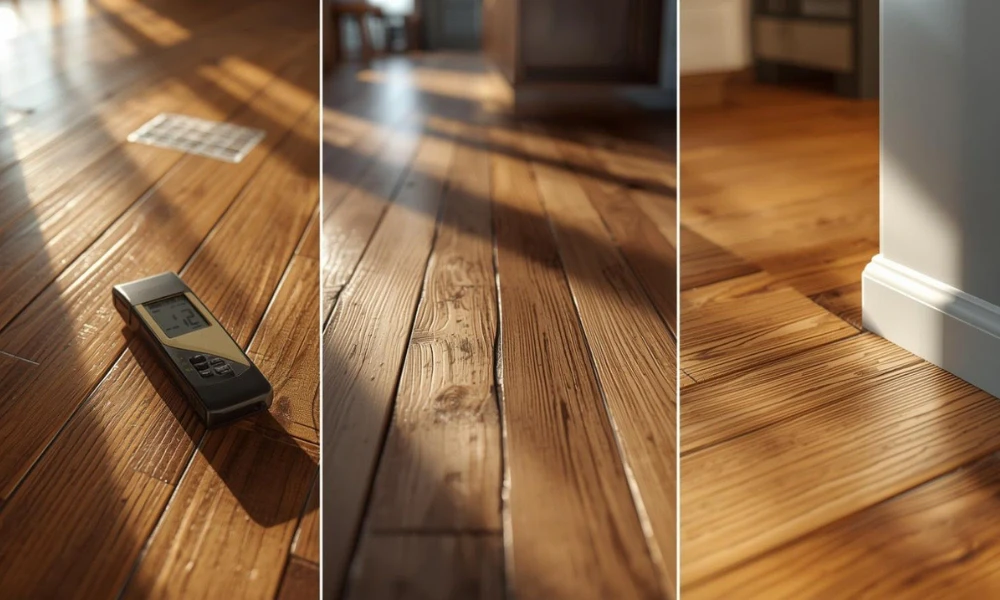
Floor symptoms like cupping, gapping, or peaking indicate that your wood is reacting to a moisture imbalance in your home. I see these issues often, and they are signals that the wood is trying to adapt to its environment. If you understand these signs early, you can often stop the damage before it becomes permanent.
Floor Boards Curl at the Edges
The bottom of your floorboard is wetter than the top. This happens when moisture from the concrete slab or a crawlspace enters the underside of the wood. The bottom of the plank swells and forces the edges to curl upward.
I once visited a house where every single plank looked like a tiny boat because of a slow leak under the slab.
Gaps Between Planks
The wood is losing moisture and shrinking. This usually occurs during the winter when your heating system dries out the air. As the wood cells lose water, the planks get thinner and pull away from each other.
I find that gaps are the most common complaint in North Texas during the first cold snap of the year.
Floor Lifts or Peaking in Spots
The floor has run out of room to expand and is pushing upward at the joints. This is often caused by high humidity or a lack of expansion space at the walls. When planks have no room to grow, they tent up like a mountain peak.
I notice this most frequently near kitchen islands, where the floor is pinned down and cannot move. When the pressure is this intense, it’s not uncommon to see stress cracks nearby that eventually require drywall repair as the entire room adjusts.
How To Prevent Flooring Problems From Dallas Humidity?
You can prevent flooring problems by maintaining a stable indoor humidity and ensuring the concrete foundation is properly dried before installation.
I have found that most floor failures are entirely avoidable if you treat the house as a controlled environment rather than just a construction site.
Since durability is the top priority for 67% of homeowners, following a strict preparation and maintenance protocol is the only way to keep your planks flat and stable for decades.
Conduct Slab Testing
Drilling into the concrete is the only way to prove it is safe for wood. This test involves inserting probes into the slab to measure relative humidity deep within the concrete.
Most people only check the surface, but moisture often stays trapped in the center. I once saved a project where the surface looked dry, but the ASTM F2170 test showed the slab was still at 90% humidity, which would have ruined the floors.
| Expert note: Check the concrete using internal probes. It’s the only way to catch deep-core moisture before it ruins your boards. |
Choosing the Right Moisture Barrier for Concrete Slabs
High-quality barriers or epoxy sealers are necessary because builders’ grade plastic often is not enough for Dallas homes.
These materials create a permanent block between the damp concrete and your wood, and they also help you avoid vinyl plank problems caused by rising vapor.
I recommend using a liquid-applied moisture vapor barrier because it bonds directly to the slab and leaves no gaps for moisture to escape.
Prepare the Surface
Correct surface preparation prevents floors from popping or crunching over time. The concrete needs a specific texture, or profile, so the adhesive can grip the surface properly, especially when leveling old Dallas floors for a fresh installation.
If the slab is too smooth, the glue will eventually release, causing the wood to lift. I once worked on a repair where the entire floor could be lifted by hand because the builder had over-troweled the concrete, making it too slick for the glue to bite
How to Protect Hardwood Floors Year-Round in Dallas Weather?
You can protect your floors by maintaining a stable environment and managing the moisture levels both inside and outside your home.
In North Texas, our wild weather swings mean you have to be proactive to prevent the wood from reacting to the humidity. Whether you are installing matte finishes or choosing sheen glossy floors, that deep-core moisture will eventually ruin the look if not addressed.
Monitoring Indoor Humidity
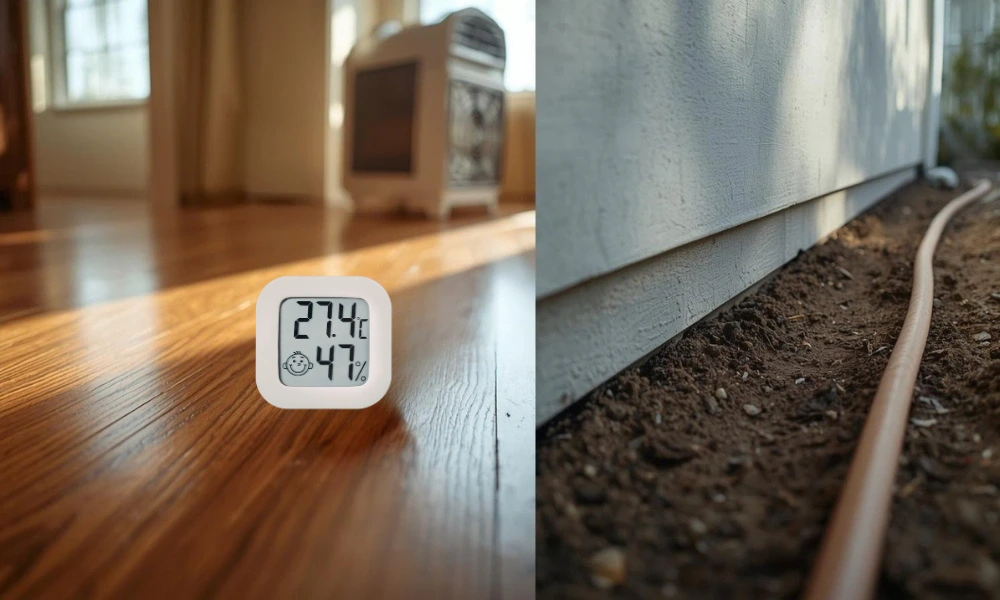
Use inexpensive hygrometers to track your home’s health and prevent wood from reacting to the “invisible” moisture in the air.
These small devices tell you exactly when your air is too dry or too damp so you can adjust your HVAC, humidifier, or dehumidifier before the wood starts to move.
I recommend keeping one in every room with wood floors because the stakes in North Texas are high.
While the Dallas average daily RH is 65%, your hardwood needs an indoor environment between 35% and 55% to remain stable. I once helped a homeowner discover their guest wing to a localized HVAC issue, saving them from a major buckling disaster just by checking a $10 tool.
Watering the Foundation
Soaker hoses keep your foundation and your floors from shifting. When the North Texas clay soil dries out and shrinks, your foundation can move, which physically pulls your wood floors apart.
By keeping the soil around your home consistently moist, you stabilize the slab and the wood on top of it. I have seen many gapped floors that were actually caused by a shifting foundation rather than the wood itself.
| Safety Tip: Place soaker hoses 12–18 inches from the foundation to prevent soil erosion or basement seepage. Over-watering too close to the slab can cause hydrostatic pressure, forcing moisture up through the concrete and ruining your wood from underneath. |
Final Thoughts
Maintaining hardwood floors in North Texas requires a proactive approach to moisture and climate control.
By ensuring proper slab testing, leaving adequate expansion gaps, and stabilizing your indoor humidity, you can prevent costly cupping and gapping. Keep this in mind, wood is a living material; if you treat it with the care it deserves, it will last a lifetime.
At Texas Pro Remodeling, we specialize in ensuring your home’s foundation and environment are perfectly prepped for long-lasting floors. Protect your investment with expert guidance. Contact us today for a professional consultation.
Frequently Asked Questions
Can A Builder Legally Deny Responsibility For Floor Gaps Or Cupping?
If the builder failed to document the slab’s Relative Humidity (RH) levels per NWFA guidelines, they generally cannot blame you for failures caused by latent slab moisture.
Why Do My Floors Look Worse After The First Summer Instead Of Winter?
Dallas summers bring extreme humidity that causes wood to “grow”; without proper expansion gaps, the wood hits walls or islands and begins to cup or peak.
Is engineered hardwood safer than solid wood in Dallas homes?
Engineered wood has better stability due to its multi-ply core, but it still requires a high-quality vapor retarder to survive a Texas concrete slab.
Why Did The Slab Test Fine, But Problems Appeared Months Later?
The installer likely used a surface meter instead of an ASTM F2170 probe, missing the deep moisture that takes months to reach the surface.
Do Foundation Watering Systems Help Or Hurt Hardwood Floors?
They help because consistent watering stabilizes the clay soil, preventing the foundation shifts that pull your floor joints apart.