
In my 12 years of inspecting Dallas homes, I have noticed most gaps and structural shifts appear within the first two seasonal cycles. I have walked through many homes where a beautiful floor suddenly feels like a mystery, seeing a board pop or a new gap appear.
I have seen firsthand that these flooring problems happen due to North Texas humidity, uneven subfloors, or hidden moisture under your slab. Understanding these causes, based on my field experience, is the first step toward a permanent fix.
Here, I will show you how to identify common symptoms, use professional tools to find the cause, and handle repairs or builder disputes with confidence. Let’s explore the in-depth details that most people miss.
Key Takeaways
|
Does the Dallas Climate Affect My Floors?
Yes, Dallas’s climate has a major impact on flooring, especially wood and wood-based materials. Extreme heat, high humidity, and seasonal swings can cause expansion, contraction, buckling, or shrinking.
Maintaining indoor humidity around 35–55% and properly acclimating new flooring are key to protecting your investment. While tile and vinyl handle these conditions better, wood, laminate, and carpet still require humidity control to prevent issues like gaps, cupping, or warping.
What Flooring Problems Are Most Common in Dallas Homes?
In Dallas, the most common flooring problems are gapping and cupping in hardwoods due to extreme seasonal humidity, bouncy or buckling planks caused by uneven concrete subfloors, and cracked tiles resulting from shifting North Texas clay soil.
Gaps or Curled Edges in Wood Floors
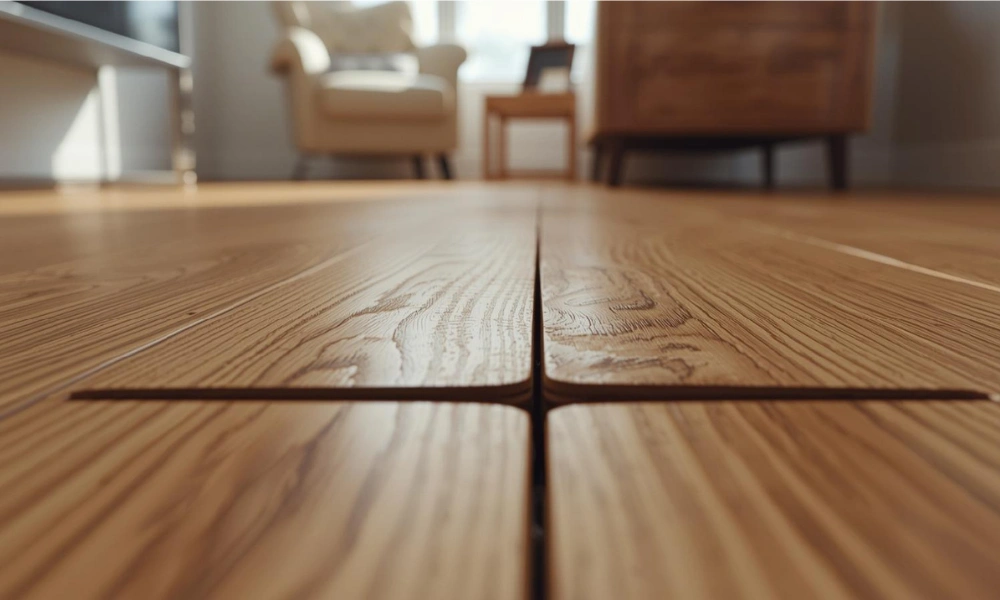
Hardwood gaps and cupped edges are caused by fluctuations in moisture levels in North Texas. Wood acts like a sponge; it expands in humid air and contracts in dry air. When moisture levels differ between the top and bottom of a plank, the plank warps.
I have seen Dallas homes develop 1/8-inch gaps simply because a winter heater dropped the indoor humidity below 35%.
Professionals recommend addressing these structural details during a full home remodeling project to ensure the new foundation and finishes are perfectly aligned.
These structural details are frequently addressed during a full home remodeling project to ensure the new foundation and finishes are perfectly aligned.
Soft or Bouncy Issues in Vinyl and Laminate Floors
Bouncy or soft spots in floating floors occur when the subfloor is not perfectly flat, leaving a void beneath the planks. If the subfloor has dips, the planks hover. When you step on them, the floor deflects downward, which eventually snaps the fragile click-lock system.
This is usually an installation error where the installer skipped using a self-leveling compound. I recently inspected a kitchen where the builder ignored a concrete dip, causing the click-lock joints to feel mushy.
Cracked or Hollow-Sounding Tile
Cracked or hollow-sounding tiles in Dallas are typically the result of foundation movement or poor thinset coverage.
I often hear hollow sounds in high-traffic areas where the glue was applied too thinly. For example, you can use the quarter test to check for lippage. If a coin catches on a tile edge, the installation is uneven and prone to cracking.
Buckling or Tenting
This happens when a floor has no room to expand. As North Texas humidity causes planks to swell, they push against the walls. Since they have nowhere else to go, the floor lifts off the subfloor, creating a tent in the middle of the room.
I see this most often when installers fail to leave a proper expansion gap around the perimeter. Without that small space hidden under your baseboards, the pressure from the swelling material forces the floor upward.
Peeling or Adhesive Failure
This occurs when moisture seeps up through the concrete slab, a process called hydrostatic pressure. This moisture attacks the glue, causing wood planks to lift or vinyl tiles to peel at the edges.
It happens due to a missing vapor barrier. In Dallas, if the ground stays saturated after heavy rain, that moisture trapped under your house tries to escape through your floor, dissolving the adhesive.
How Can I Check My Floors for Problems?
To check your floors for problems, use a hygrometer to monitor humidity and a straightedge to identify subfloor dips. You can compare localized damage against batch-wide issues to help differentiate between installation errors and product defects.
Simple DIY Tests
Identify flooring failures by monitoring indoor Relative Humidity (RH) and checking for subfloor dips with a 10-foot straightedge.
I always tell homeowners to use a hygrometer to monitor humidity. If your humidity stays above 60% or below 30%, your floors will eventually shift. To find dips, lay a straight board across the floor; light shining through the board indicates a low spot.
I use the Rule of 3: a dip deeper than 3/16 of an inch requires subfloor repair. Identifying these early signs helps you avoid common flooring regrets like bouncy laminate floors.
| Warning: These DIY tests can identify surface symptoms. For large wall cracks or doors that fail to close, indicate potential foundation issues and contact professionals immediately. |
Professional Inspections
You can call a pro for growing cracks or warranty claims. Experts use infrared scanning to find hidden leaks and ASTM F2170 tests to measure deep concrete moisture.
Thermal cameras reveal cold spots from pipe leaks or vapor barrier failures that the human eye misses.
On a recent inspection with Texas Pro Remodeling, we found that uninsulated HVAC ducts were causing condensation to rain onto a subfloor, rotting the wood from the bottom up.
Install Error vs. Product Defect
Installation errors are usually localized, like a single bouncy spot or a hollow tile. Product defects appear throughout the batch, including a flaking finish on every plank.
I look for installation footprints, like a pancake of glue instead of a full mortar bed. To verify a defect, check your leftover boxes; if uninstalled planks have the same curve as the ones on your floor, the manufacturer is likely at fault.
For most homeowners, professional flooring services provide the equipment and expertise needed to remove damaged materials and install a new surface that is guaranteed to stay flat and stable.
Identifying Dents vs. Installation Bruises
Dents represent structural core damage, while scratches are usually limited to the surface wear layer. Unlike surface scratches, dents damage the plank’s structural core. In Dallas, I frequently find hammering bruises along edges where installers used tapping blocks too aggressively.
If the Fiber Swell test (using a damp, warm cloth and iron) fails to lift the mark, the structural fibers are likely crushed. In my professional opinion, repeating circular indentations typically indicate high heels or heavy furniture rather than a product defect.
How to Fix Flooring Problems in Dallas?
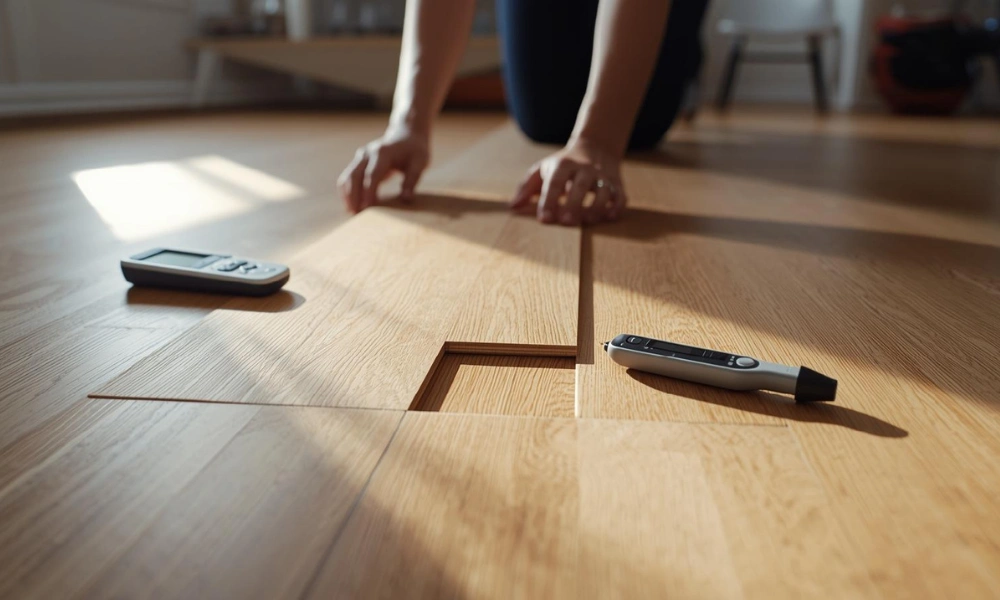
To fix flooring problems in Dallas, you must stabilize indoor humidity, level the subfloor with a self-leveling compound, and maintain consistent soil moisture around your foundation using soaker hoses. Here is how you can fix the flooring problems:
Stabilize Indoor Humidity
Maintain consistent indoor humidity between 35% and 55% to stop wood planks from shifting. Use this solution to fix wood gaps and cupping.
In my 12 years of experience, balancing humidity is the best way to eliminate floor gaps. Indoor relative humidity should be kept below 60 percent, between 30 percent and 50 percent.
If the air remains stable, many wood planks naturally return to their original shape. Consistent climate control is the best way to prevent a new floor gap from forming as the seasons change.
Level the Subfloor
This process fixes bouncy or soft vinyl and laminate floors. Remove the planks and apply a self-leveling compound to all low spots.
Ensure the subfloor is flat within 3/16 of an inch before clicking the planks back together to prevent the locking joints from snapping under pressure.
Avoiding cleaning mistakes that ruin vinyl plank floors, such as using excessive water or steam mops, is equally important once the floor is reinstalled.
Improve Attic and Foundation Airflow
Clear blocked soffit vents to stop rising heat from pulling moisture through your subfloor. I often find cupping of hardwood floors caused by the Stack Effect.
In one North Dallas home, clearing bird nests from soffit vents restored proper attic ventilation and flattened cupped floors within three weeks.
Restoring airflow often flattens cupping floors within weeks. For homes with crawlspaces, install a 6-mil vapor barrier to stop ground moisture from reaching the floorboards.
Address Soil Moisture
Use a soaker hose system to fix seasonal foundation shifts. Maintain consistent moisture levels around your foundation to keep the soil moist but not muddy year-round. This prevents Houston Black clay from shrinking and pulling away, which keeps your foundation and tile stable.
Use Crack Isolation Membranes
This method fixes cracked or snapping tiles. When replacing damaged sections, install a crack isolation membrane between the concrete and the new tile. It acts as a flexible buffer, helping the slab move slightly without pulling the rigid tile apart.
- Simple DIY Quick Fixes
Stabilize floor damage immediately using humidity control, adhesive injections, or steam lifting. In my field work, I have found these actionable steps provide the fastest relief:
- Run a portable humidifier to reach 45% humidity. Wood planks return to their original position as they absorb moisture.
- Inject floor-fixing adhesive through a small hole to fill subfloor voids and stop the trampoline effect.
- Use the Fiber Swell test by placing a damp, warm cloth over the dent and applying a warm iron for 10 seconds to steam wood fibers upward.
- Mop with a 50/50 mixture of water and white vinegar to strip oily residue and restore the floor’s original grip.
What Should I Do If My Floors Are Failing?
To address failing floors, you should use industry standards to hold builders accountable, leverage insurance-matching rules, and conduct a water test to identify the least expensive repair.
- Talk To The Official Standards
Contact official standards like NWFA or TCNA. If a builder blames house settling, ask for the moisture logs and subfloor flatness readings from the day of installation.
I once ended a dispute by showing a builder that, per industry rules, a floor gap wider than a credit card is a failure, not normal settling.
- Handling Insurance Claims
Focus on the uniformity rule. If a damaged floor connects to other rooms, insurers often must replace the entire continuous area to ensure a match.
I helped a client get a full replacement for a 500-square-foot room after a small pipe burst, as their discontinued laminate could not be matched.
| Note: Always send claims or notices through certified mail to create a legal paper trail. Ensure your photos are taken from a standing position to align with official inspection guidelines. |
- Buffing vs. Refinishing
Use a screen and recoat (buffing) for surface scratches. Only refinish (sand to raw wood) if the damage is serious. Use the water drop test; if water beads, buff it; if it soaks in, sand it.
Proper maintenance is also the best way to avoid vinyl plank problems and extend the life of your hardwood finish.
I have seen homeowners save $4,000 by choosing a buffing facelift when they originally thought they needed a full, better refinish.
How Can I Make My Floors Last Longer?
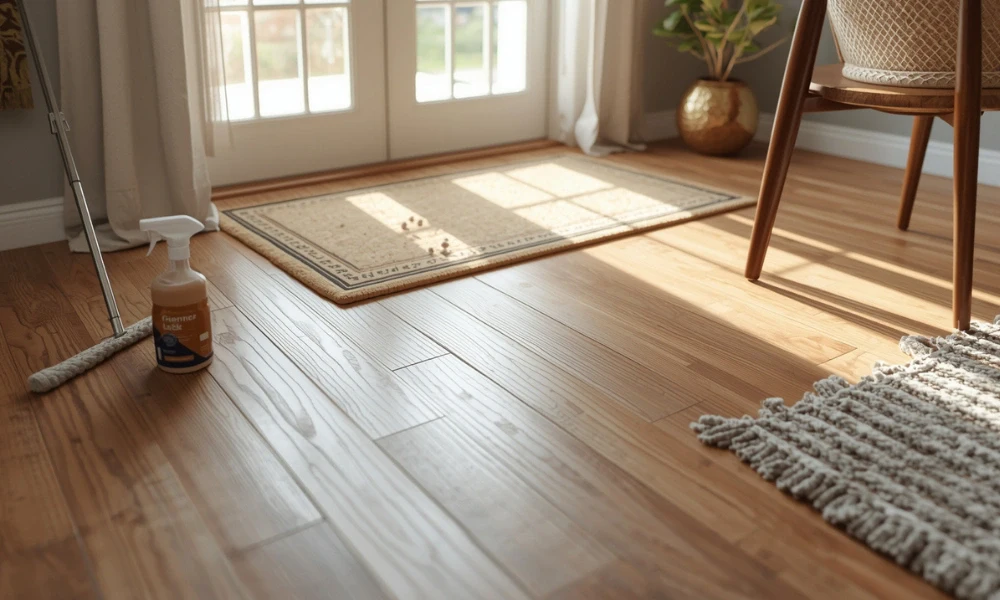
To maximize your floor’s lifespan, use pH-neutral cleaners to prevent residue buildup and install physical barriers like mats and felt pads to reduce friction and UV damage.
- Maintenance of different floor types
Hardwood offers superior longevity and refinishing, but it remains significantly more sensitive to humidity than vinyl or laminate. While LVP handles Dallas moisture better, it cannot be sanded down if damaged. Understanding this trade-off helps you choose the right maintenance schedule for your home’s specific micro-climate.
- Use pH-Neutral Cleaners
Use neutral cleaners to prevent sticky residue and chemical damage to your floor’s finish. I recommend avoiding mop-and-shine products or waxes that leave sticky residues.
These dirt magnets make floors look dull and slippery over time. For wood and LVT, a simple spray with a neutral cleaner protects the wear layer. I once restored a floor’s natural grip by stripping off years of wax buildup with the cleaners.
- Avoid Using Liquid Sandpaper
Remove grit and sand act like sandpaper, grinding away your floor’s finish. Use high-quality mats at every entrance to catch debris. For example, a $20 rug at every door is the most effective insurance policy for your floor’s finish.
- Upgrade Furniture Protection
Apply felt pads to all furniture legs to avoid deep structural dents. I have seen thousands of dollars in damage that could have been avoided by swapping hard-plastic wheels for soft-rubber casters.
- Block UV Rays
Intense sun causes sun-ghosting, where wood fades or turns yellow, leaving it visible only under rugs. Professionals recommend installing UV-resistant window films or curtains to block afternoon heat.
I have seen beautiful walnut floors ruined by sun exposure; a simple window tint is much cheaper than a full refinishing bill.
Protect Your Dallas Floors Today. Call Us Today!
Taking care of your floors starts with understanding what they are trying to tell you. By matching symptoms like gaps or bounces to the North Texas climate, you can move past quick fixes and find real, lasting solutions.
Whether you are dealing with a builder dispute or simply want to maintain floors, a thorough and detailed approach ensures your investment is protected for years to come.
Want to fix your flooring problems once and for all? Contact Texas Pro Remodeling today for a professional consultation!
Frequently Asked Questions
When should I worry about gaps in my hardwood floors?
If a gap is wider than a credit card (0.03 inches) during humid months, it indicates a failure. Small gaps in winter are normal, but gaps that persist into spring suggest an installation or humidity-control issue.
How long is the typical flooring warranty?
Most flooring warranties range from 10 to 25 years, but coverage strictly depends on proof of proper installation and maintenance.
How do I make my tile floors less slippery?
First, use a pH-neutral cleaner to strip away slippery soap or wax buildup. If more grip is needed, apply a topical anti-slip treatment to increase the Dynamic Coefficient of Friction (DCOF) without altering the tile’s look.
Can dog scratches on engineered hardwood be repaired?
Surface-level scratches can be hidden with a touch-up kit or a screen and recoat. However, if a gouge cuts through the wear layer into the plywood core, you must replace the individual plank.
What should I do if my builder says buckling is normal settling?
Buckling is not normal. It occurs due to a lack of expansion gaps or high moisture levels. Request the builder’s moisture logs and installation records to demonstrate that the floor was installed in accordance with industry standards.