


Your roof is the most important component of your home’s building envelope performance. It affects your monthly expenses by acting as the primary barrier against solar heat gain. In Dallas-Fort Worth, an inefficient roof, whether old or new, can increase cooling costs by 20% to 30%.
At Texas Pro Remodeling, we focus on optimizing solar reflectance, attic air sealing, and balanced ventilation. Transform your roof into a thermal shield that reduces the load on your HVAC system and lowers your monthly overhead.
|
Key Takeaways
|
How Does An Old Roof Impact Your Monthly Electric Bill?
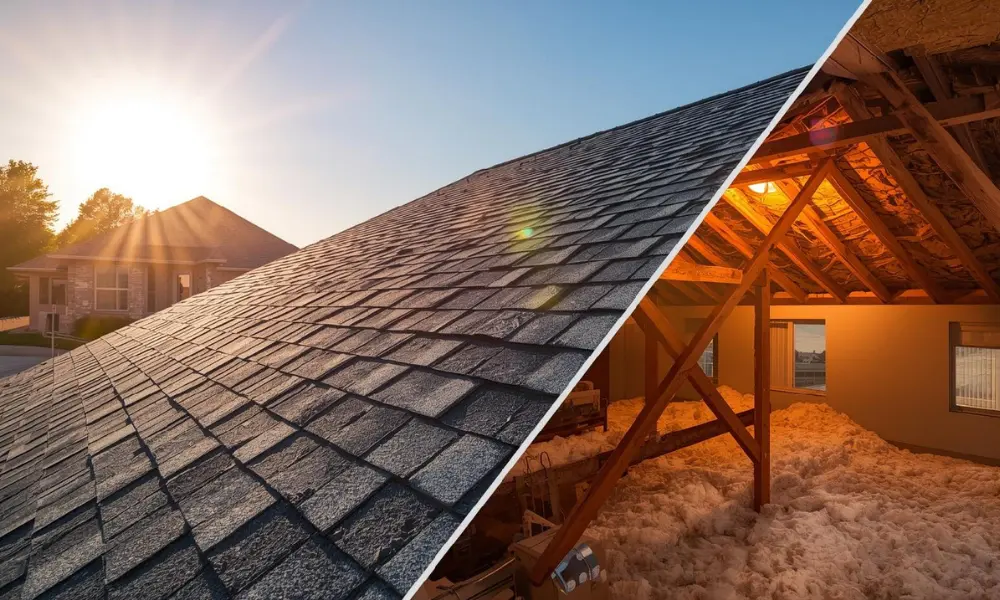
An aging roof doesn’t just threaten your home’s structure; it also drives rising utility costs. As roofing materials wear down, they stop blocking heat. This makes your HVAC system work harder just to keep your home comfortable.
1. Loss of Solar Reflectance (The Heat Sink Effect)
Fresh asphalt shingles are designed with granules that provide a high Solar Reflectance Index (SRI). Over time, these granules wear away, exposing the dark, underlying asphalt.
Instead of reflecting UV rays, the roof absorbs them, creating a “heat sink.” This heat moves through the roof sheathing and into your attic via radiant heat transfer. As it builds up, it raises your home’s temperature.
2. Increased HVAC Load and Cycle Length
When your attic temperature climbs due to poor roof reflectance, your air conditioning system must compensate for the “heat gain.”
Your HVAC runs for extended periods to combat the radiant heat bleeding through the ceiling. Constant operation leads to higher maintenance costs and a shorter lifespan for your cooling unit. It’s a common concern among DFW homeowners.
3. Compromised Thermal Barriers and R-Value
A roof near the end of its life often suffers from underlying issues that affect your home’s thermal resistance:
Old roofs are prone to slow leaks. Even minor moisture intrusion can cause attic insulation to clump, reducing its R-value. Old shingles and worn underlayment let cool air leak out and hot air move in. This breaks the home’s natural energy barrier and lowers efficiency.
If your upstairs rooms are significantly warmer than your downstairs, it is a clear sign that your roof’s thermal barrier is failing. Checking for early roof leaks can save you the “extra” expense of replacing water-damaged insulation later.
Does A New Roof Upgrade Lower Utility Costs In North Texas?
Yes. A high-performance roof upgrade lowers utility costs by utilizing materials with high albedo (reflectivity) and thermal emittance. Choosing reflective shingles or energy-efficient metal roofing for hot climates can reduce peak cooling demand by up to 27%.
Modern cool roof shingles for peak demand reduction are designed with specialized granules that bounce sunlight back into the atmosphere. Metal roofing or tile roof thermal mass offers superior protection with long term efficiency.
A standing-seam metal roof offers superior solar reflectance compared to traditional roofingmaterials. If you prefer shingles, we use reflective shingles that meet ENERGY STAR standards to reduce cooling costs.
We often include a synthetic roofing underlayment for its thermal performance benefits. This layer provides a secondary shield against conductive heat flow. We recommend that every homeowner understand roofing basics, like the parts and terms, first, before a new upgrade.
Why Is The Upstairs Always Hotter In North Texas Homes?
A hot second floor usually signals a failure in attic air sealing or duct integrity. When your attic is overheated, radiant heat transfer penetrates the ceiling, while leaky ductwork in the attic wastes 20% of your conditioned air before it reaches your rooms.
Many homeowners replace their roof but forget about duct leakage and mastic sealing. If your attic ductwork is old, it allows your cold air to escape. We recommend using a duct insulation wrap to keep that air cold.
Furthermore, you must address thermal bridging through rafters. Heat travels through the wooden beams faster than the insulation. Adding roof deck insulation to improve efficiency or installing a radiant barrier under the roof can stop this transfer.
By addressing attic air sealing around bypasses (pipes and light fixtures), you stop the stack effect from pulling hot air down into the attic. A properly installed roof vent most effectively affects utility bills when the space beneath it is airtight.
All these steps are part of our roof inspection, and now you have an idea of what to expect if you hire experts from Texas Pro Remodeling.
How Can You Lower Winter Heat Loss Through The Attic For More Efficiency?
During a North Texas freeze, your attic is often the primary escape route for expensive heated air. To lower your winter utility bills and increase energy efficiency, you must focus on reinforcing the building envelope through 3 specific methods.
1. Optimize Thermal Resistance (R-Value)
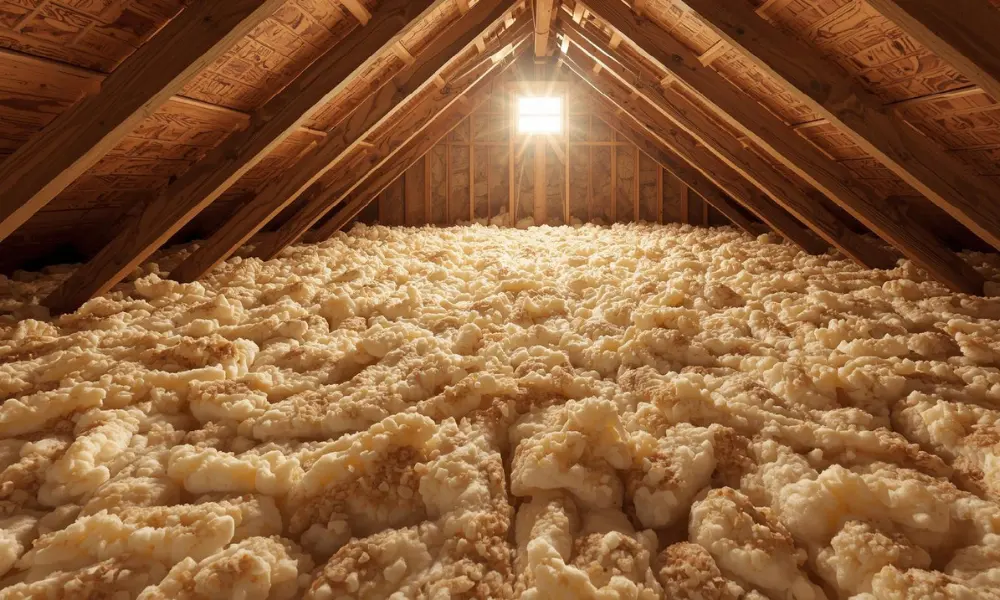
Thermal resistance, or R-value, measures how well insulation resists heat flow. Under International Energy Conservation Code (IECC) standards, we recommend a strategic upgrade to your attic’s insulation.
For most efficiency in the Dallas–Fort Worth climate, aim for an insulation level of R-38 to R-60. High-quality insulation prevents heat from rising through the ceiling and escaping via thermal bridging in the rafters.
2. Comprehensive Attic Air Sealing
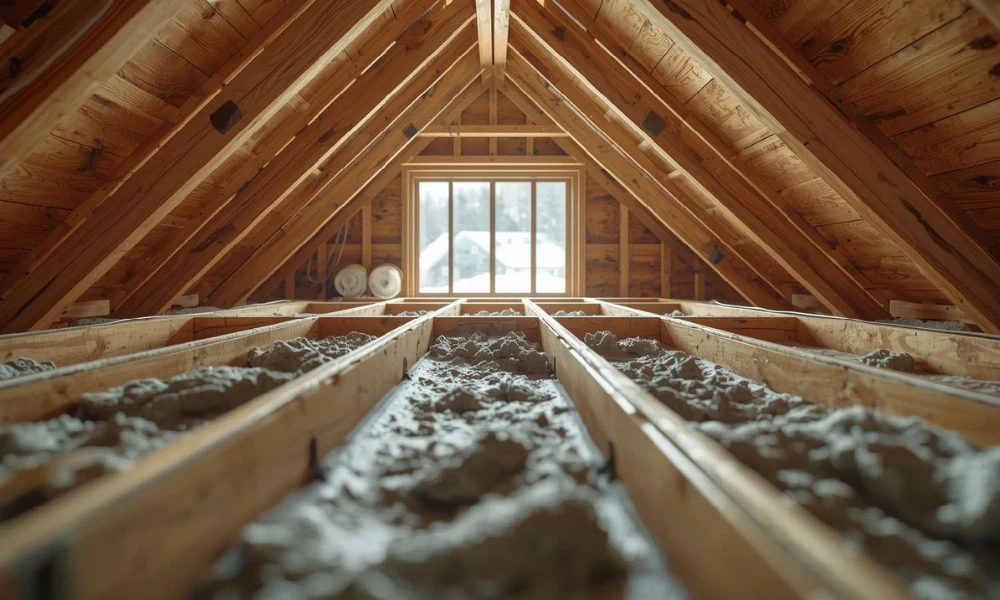
Insulation alone isn’t enough if air is physically leaking out. Attic air sealing stops “convective air movement.” It’s a process where warm air is sucked out of your living space.
We seal hidden gaps around light fixtures, plumbing stacks, and electrical wires. Proper sealing keeps the roof deck cool, which prevents snow/ice from melting and refreezing at the eaves. This drastically reduces ice dam risk during ice storms.
3. Strengthen the Building Envelope
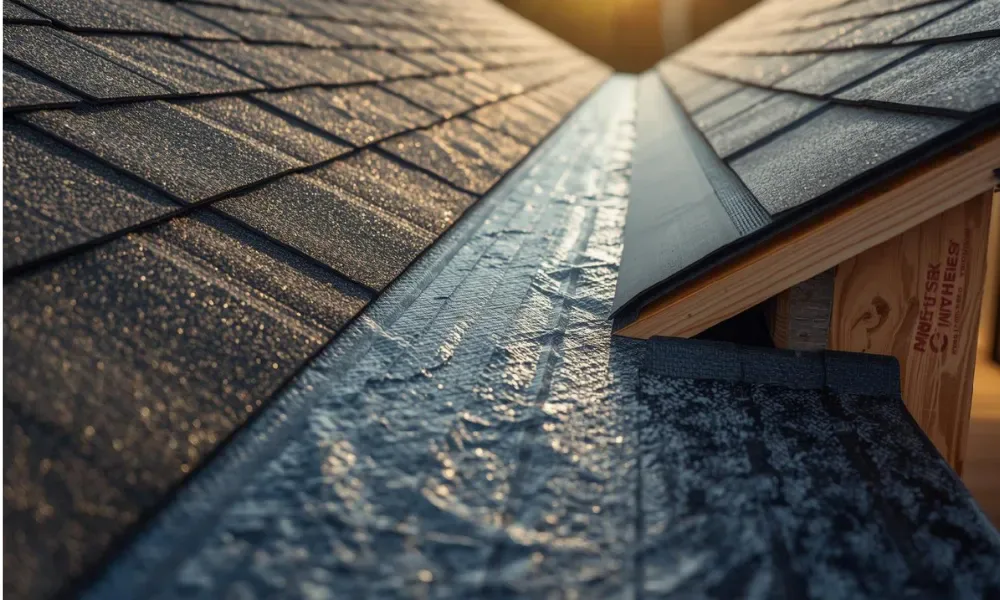
A modern roofing system serves more than just as a rain shield; it is a thermal barrier.
Unlike felt, robust synthetic roofing underlayment provides an airtight layer of protection that helps stabilize indoor temperatures.
While often associated with summer, these can also help reflect internal heat back toward the living space during winter months.
Conclusion
Your roof is a complex machine that dictates your utility bill every single month. From the Solar Reflectance Index (SRI) of your shingles to the balanced attic ventilation in your rafters, every detail contributes to your energy efficiency. Focusing on solar reflectance, air sealing, and insulation R-value is the surest way to save, whether you are maintaining an older roof or investing in a new system.
At Texas Pro Remodeling, we take pride in helping our neighbors achieve the highest comfort. Small steps, such as understanding the purpose of your home’s gutters, can protect your foundation and roof edges from moisture that may ruin your efficiency. Your roof serves as your best defense against the Texas elements.
Frequently Asked Questions
Does a white roof really save money?
Yes, a white roof reflects up to 90% of solar heat, significantly lowering the cooling load and reducing electricity costs by an average of 10% to 20%.
Is it normal for my electric bill to double while the roof is being replaced?
Yes, removing the roof temporarily destroys your building’s thermal barrier and exposes the raw decking to direct heat, forcing your AC to work much harder until the new system is installed.
Does shingle color (black vs. light grey) really matter for my Texas electric bill?
Absolutely, as light grey shingles stay significantly cooler than black ones, reflecting heat that would otherwise soak into your attic and increase your AC runtime.
Does a “Cool Roof” lose its efficiency if it gets dirty?
While heavy dust or pollen can slightly lower reflectivity, modern cool roofs remain far more efficient than dark roofs and typically regain their performance after a good rainfall.
Why is my electric bill so high even though my roof looks fine?
Your shingles may be thermally “dead” from losing their reflective granules, causing the roof to act as a heat sink even if it is structurally sound and leak-free.