


When you live in North Texas, your roof is more than curb appeal; it is a complex, multi-layered shield designed to manage extreme heat and impact through a balance of structural decking, impact-resistant shingles, and proper ventilation.
I have spent years on ladders across the Metroplex, and I can tell you that a Dallas summer will find every weakness in your home. Here, I will talk about the roofing basics for DFW homeowners, specifically teaching you the anatomy of a Texas roof and critical deductible laws.
You will also learn how to protect your investment from storm chaser scams. Whether you are in Plano or Fort Worth, you deserve to know how your shield actually works.
Key Takeaways
|
Why Do DFW Homeowners Need a Roofing Survival Mindset?
A roofing survival mindset is necessary in DFW because North Texas is a global hail hotspot where extreme weather constantly puts home structures under stress.
- Extreme Heat: DFW sun reaches high UV levels that cook shingles, causing them to become brittle.
- High Winds: Spring storms bring “wind uplift” that can peel off weak shingles or blow debris against the structure.
- Hail Impact: Large hail can bruise the shingle mat, leading to granular loss and leaks later.
Your roof acts as a shield against baseball-sized hail and 100°F heat. Understanding these parts helps you avoid storm chaser scams and ensures your roof is built to last.
One of my neighbors in Arlington ignored small dents on their gutters after a spring storm; a year later, the bruised shingles cracked, leading to a collapsed ceiling. Knowing what to expect during a roof inspection can help you identify these hidden issues early.
What Are the Key Components of a Texas Roof?
A Texas roof is a multi-layered system of decking, underlayment, and shingles that work together to repel water and reflect solar heat. I tell people a roof is like a suit of armor, where each part has a specific job to do.
Key Roof Components
| Component | What It Is | Why It Is Critical for DFW |
| Decking and Frames | The structural wood base (OSB/Plywood). | The foundation; if it bounces, it is likely rotting. |
| Underlayment | Water-resistant barrier over the wood. | A second shield, synthetic resists high wind better than felt. |
| Shingles | Visible outer protection layer | Class 4 shingles are tested to survive golf-ball hail. |
| Drip Edge | Metal perimeter strip. | Prevents fascia rot and directs water into gutters. |
| Flashing | Metal sheet | Works as leak protection into corners and around chimneys to stop water from seeping into the most vulnerable gaps. |
| Skylights | Aluminum or Vinyl frame with a glass protective layer | Works as ventilation, natural lighting, and hail protection. |
Roof Decking and Frames
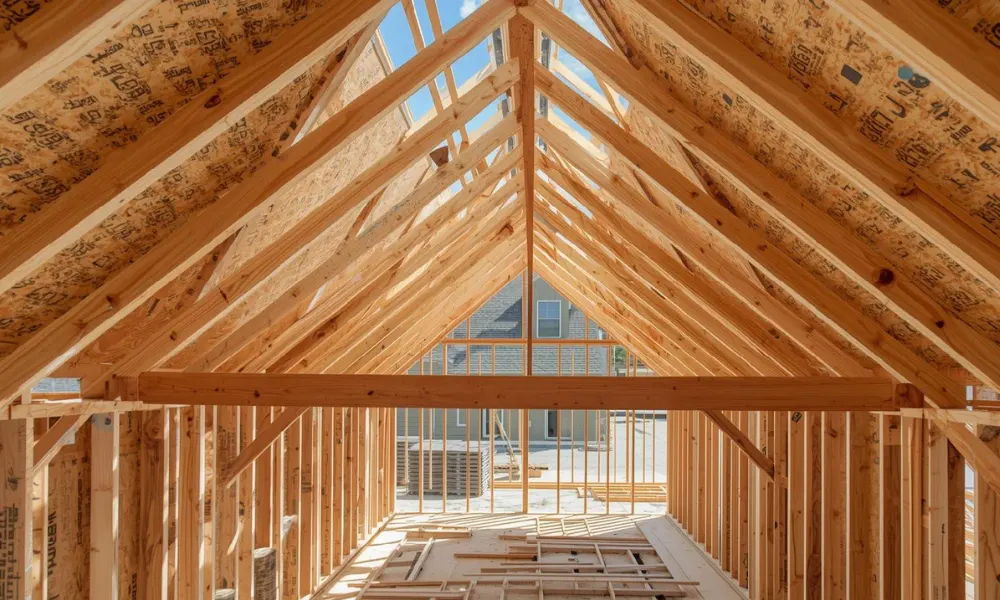
Roof decking, also called sheathing, is the structural base that everything else sits on.
Most DFW homes use 7/16” OSB (Oriented Strand Board) or CDX Plywood. Plywood is slightly more moisture-resistant and stiffer, while OSB is cost-effective and provides a very uniform surface.
In newer McKinney and Frisco developments, pre-fabricated frames are common. These engineered triangular frames provide superior strength for high-ceiling designs and can support the weight of heavy stone-coated steel or clay tiles.
Underlayment and Shingles
The shingles and underlayment work together as your home’s primary weather shield. Shingles act as the outer protection, using stone-coated asphalt to block the sun and shed heavy rain.
In North Texas, Class 4 shingles are best because they are flexible enough to survive hail without cracking.
The Underlayment acts as a waterproof lining. This high-tech fabric covers the wood decking, catching any moisture that wind might blow under the shingles.
Research highlights that using these energy-efficient materials can achieve up to 13.2% energy savings during the hot summer months. Together, these layers ensure that your wooden foundation stays dry while your AC works less, saving you money every month.
Metal Drip Edge
The drip edge is a metal strip installed along your roof’s perimeter to prevent wood rot. Its main job is the kick-out effect: it forces rainwater to fall directly into gutters rather than wicking backward into your wooden boards.
In North Texas, it also seals the carpenter’s gap to block pests like squirrels from entering your attic.
By extending at least 2 inches onto the deck, this galvanized steel barrier meets local codes and ensures your roof’s edges stay dry, sturdy, and watertight for decades.
Flashing
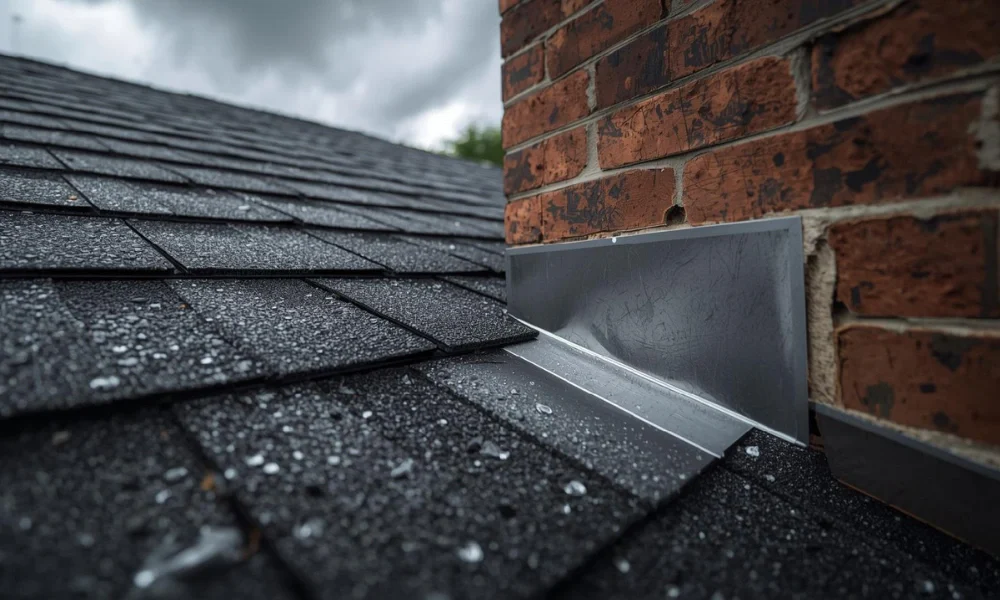
Flashing acts as the specialized sealant for your roof’s most vulnerable spots. This is how flashing works for the roof:
- Flashing consists of thin metal sheets used to seal the joints where your roof meets walls, chimneys, or skylights.
- Step flashing is an L-shaped metal piece that joins shingles and vertical walls. At Texas Pro Remodeling, we use this method to ensure water steps down the roof rather than seeping behind your siding.
- Specifically for chimneys, you install this metal directly into the mortar joints. This creates a secondary shield that prevents water from ever reaching the wooden structure of your home.
- I recommend using galvanized steel or aluminum to prevent rust, ensuring these high-risk areas remain watertight even in intense North Texas storms.
Skylights
A Skylight is a system of parts designed to let light in while keeping the weather out.
- Raised wooden frame: It lifts the skylight above the roof surface so water flows around it instead of pooling against the glass.
- Waterproof Protection: A sticky, rubbery tape wrapped around the base. It seals the gap between the wood and the window, stopping even the tiniest drops of moisture from sneaking in.
- Low-E Glass: A special invisible coating that acts like sunglasses for your home. It lets natural light shine in but reflects the hot sun away to keep your room cool.
- Insulated Panes: Most modern skylights use two layers of glass with a trapped pocket of air in between. This acts as a thermal barrier, similar to how a thermos keeps a drink cold.
Why is Ventilation Critical to Preventing Attic Rain?
Ventilation is critical because it regulates attic temperatures and prevents moisture buildup, which can cause attic rain and rot your roof from the inside. This is a primary reason homeowners seek professional roofing and repair services.
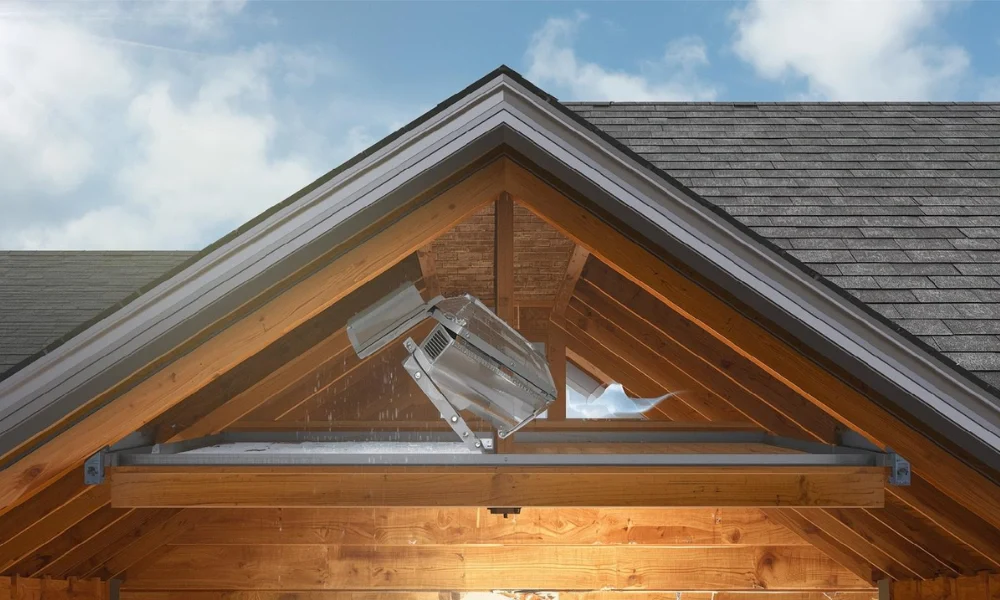
Texas summers are brutal, with DFW attics often reaching 150°F. Imagine your attic as a pressure cooker; if the steam cannot escape, it condenses.
One Frisco resident recently noticed water stains on their ceiling, even though their shingles looked perfect. They thought they had a standard leak, but it was actually attic rain moisture that had trapped, condensed, and rained down into the home.
Understanding roof vents is the first step in ensuring your home has the proper airflow to combat this moisture.
- Intake Vents (Soffits): These pull cool air in from the bottom of the roof line.
- Exhaust Vents (Ridge Vents): These allow the rising hot air to escape at the very top.
Where Are the Most Common Leak Zones on a Roof?
The most common leak zones are intersections like chimneys, valleys, and pipe vents, where water flow is naturally concentrated. Most leaks start at these joints rather than the middle of a shingle.
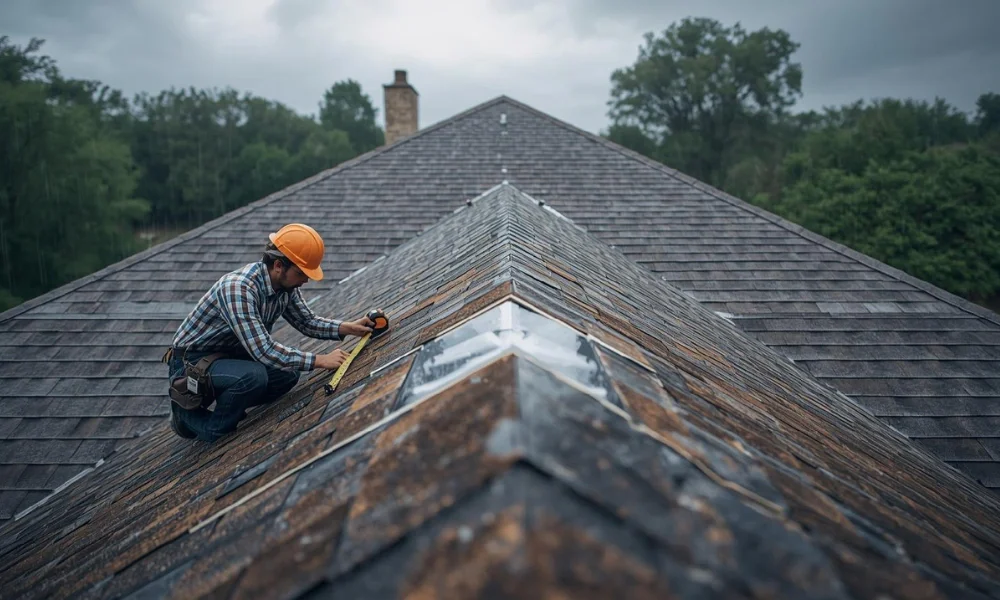
Here is how professional contractors use geometric techniques for spotting roof leaks:
- The 3-4-5 Layout Method: Professional contractors use the 3-4-5 math method (a geometric squaring technique based on the Pythagorean theorem) during layout to ensure the roof is perfectly square before shingles are installed.
- Compensating for Foundation Shift: Even if a North Texas home has shifted on its foundation, this geometric check ensures shingle courses remain perfectly straight and aligned across the entire span.
- Eliminating Gaps: High-accuracy layout prevents crooked shingle lines and eliminates wind-vulnerable gaps where rain could otherwise penetrate at the joints or edges.
- Early Detection Benefits: Spotting layout or seal issues at these high-traffic water transition points early and knowing how find leaks before they reach the ceiling can prevent significant structural damage and the need for costly repairs later.
- Risk of Delay: If you identify roof leaks too late, it can lead to rotting wood or mold, eventually requiring professional water damage restoration to ensure the home remains safe.
What is the Financial and Legal Landscape for DFW Roofing?
Picking through the money side and the legal rules of a roof replacement in North Texas can feel like a headache. Here is a simple breakdown of the laws you need to know and how your roof works with the rest of your home to keep everything bone-dry.
What is the Texas Deductible Law (HB 2102)?
In the past, some roofers would waive your insurance deductible to get your business, but Texas put a stop to that with HB 2102.
This law makes it a crime for a contractor to absorb your deductible; basically, if they offer you a free roof, they are asking you to participate in insurance fraud.
Under Texas Insurance Code Chapter 707, your insurance company can actually hold back your final payment until you show reasonable proof of payment for the deductible.
You must keep your paper trail ready, things like a canceled check, a money order receipt, or a credit card statement, to prove the transaction happened.
City Codes and Project Integration
Every city in the DFW area has its own set of rules. For instance, Dallas is pretty strict and usually requires a permit for every full roof replacement, while other cities might be more relaxed.
If you are thinking about a bigger exterior remodeling project, like new siding or windows, checking these local codes is a must. It ensures your home stays up to code, which is a huge deal when you eventually try to sell the house.
It’s also worth noting that your roof does not live on an island. Understanding the purpose of the gutters is a big part of this because your gutters and your roof’s drip edge have to work together as a team.
If these are not synced up, rainwater will just pour behind the gutters and rot your wood or, worse, pool at your foundation and cause the dreaded North Texas foundation shift.
Secure Your Roof of Mind Before the Next Storm Hits!
Protecting your North Texas home starts with seeing your roof as a unified system rather than just a collection of shingles. By prioritizing proper ventilation and quality materials, you ensure your investment survives the climate.
Don’t wait for the next storm to find a leak. Call Texas Pro Remodeling today for a professional consultation and a detailed roof health assessment to secure your home’s defence.
Frequently Asked Questions
How do I know if I have hail damage on my roof?
Hail damage appears as dark, circular bruises or craters where granules are missing. Look for soft spots indicating a fractured mat and check gutters for excessive granule buildup.
How long do asphalt shingles actually last in the Texas heat?
While rated for 30 years, DFW heat usually limits shingles to 15 to 22 years. Extreme UV radiation makes shingles brittle, causing them to lose their seal faster than in cooler climates.
What exactly is a Roofing Square?
A square is a standard industry measurement equal to 100 square feet (a 10′ x 10′ area). Contractors use this unit to calculate material costs and labor for your specific roof size.
Can I install new shingles over my old ones?
No. Adding a second layer traps heat and can reduce the new roof’s life by 40%. It also prevents a proper inspection of the wood decking for hidden rot or damage.
How often should I get a professional roof inspection?
Schedule an inspection every two years or after any major storm with hail or high winds. Regular checks provide a maintenance paper trail that is essential for future insurance claims.