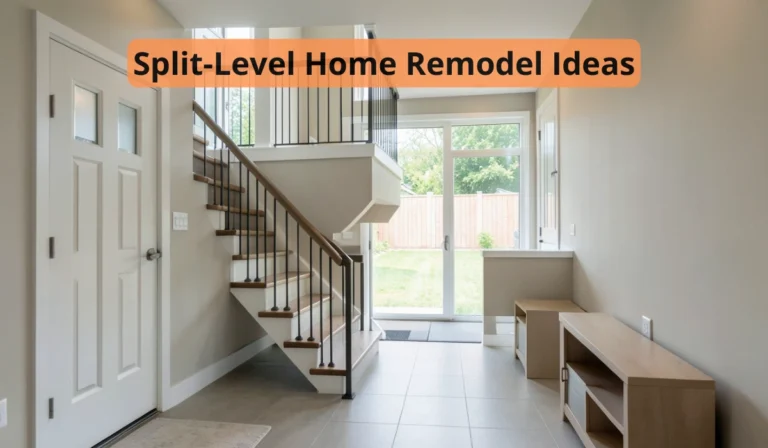



Remodeling a split-level home means fixing the choppy feel by opening sightlines and connecting staggered levels. You can transform these homes into open, bright spaces by removing half-walls and maximizing the unique floor plan.
I once helped a homeowner who felt trapped by their narrow entry landing. For once, they could see from the front door straight through to the backyard just by making a few smart structural shifts.
Sounds overwhelming? I know it is. To help you out, I have noted practical kitchen layouts, smart storage, and energy-saving secrets for the split-level homes.
Key Takeaways
|
Understanding the Remodeling Layout for Split-Level Homes
Understanding a split-level layout is essential for identifying which boxed-in half walls are purely decorative and which conceal structural transitions between staggered floors. It will help you to remove bottlenecks and create a cohesive flow that maximizes every square inch.
The landing trap occurs when the walls around the stairs stop your eyes from seeing the next level. I have found that these boxed-in half walls act like blinders. When homeowners find themselves asking whether they should remodel or move, it is often because this specific layout issue makes the home feel smaller than it actually is.
It is a common challenge, especially considering that around 48% of the owner-occupied homes were built before 1980, including around 35% built before 1970, which was the peak era for these types of designs. Once you understand the layout, you can:
- Identify Sightlines: See exactly where walls block your view of other rooms.
- Map Transitions: Understand how the entry landing connects the upper and lower zones.
- Maximize Light: Locate where opening a wall would let natural light hit the darkest corners.
I have stood in many entries where a landing trap makes you feel boxed in the moment you walk through the door. You need to understand your layout because the unique staggered floors dictate how light, sound, and people move through your home.
If you do not grasp how your stairs and sightlines interact, your remodel will likely feel like a series of expensive, disconnected patches.
The homes with clear sightlines sell faster and feel 30% larger than those with closed floor plans. I often suggest using Armstrong Ceiling Planks across these open areas to unify the staggered heights into one continuous design.
Top 8 Practical Split-Level Remodeling Ideas
1. Open Up the View: Replacing Half-Walls with Modern Railings
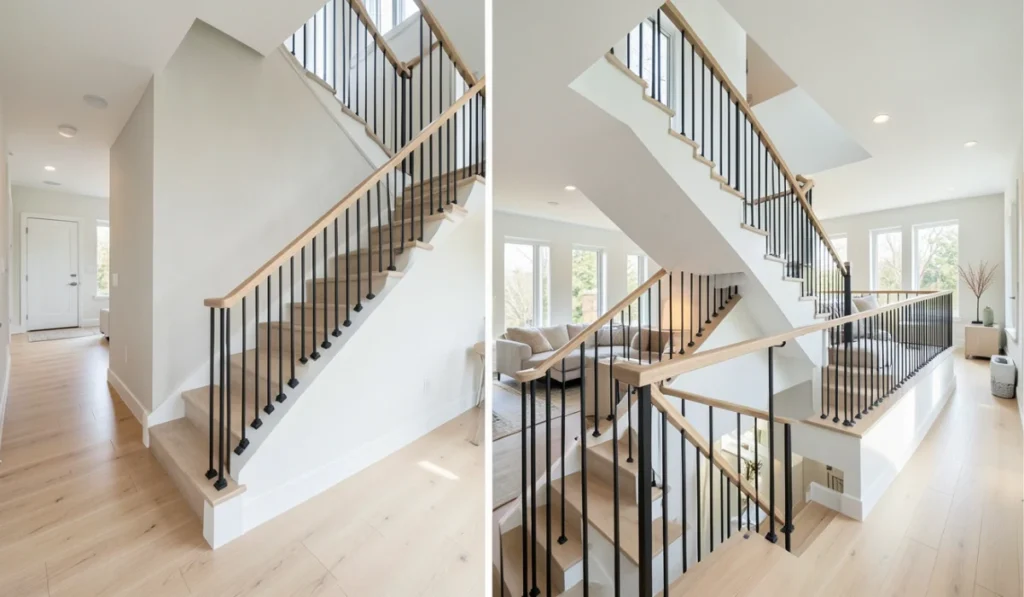
Replacing solid half-walls with open railings removes visual obstructions and instantly connects your staggered levels. This upgrade expands your view and lets natural light move freely
between the entryway and living zones.
I have walked through many split-levels where the living room feels like a cage due to heavy drywall partitions. Integrating professional flooring services alongside these railing updates ensures a seamless transition where the new stairs meet your existing levels. Swapping these for open railings is the fastest way to make your main floor feel like a high-end loft.
By thinning the profile of your stairs, you allow the eye to travel further. I suggest using slim balusters to maximize this see-through effect. However, you must ensure your new design meets local safety codes for spacing and height, usually requiring balusters to be no more than 4 inches apart to keep the space safe for children and pets.
| Railing Style | Visual Impact | Best Material |
| Horizontal Cable | Industrial & Airy | Stainless Steel |
| Vertical Spindle | Classic & Clean | Matte Black Metal |
| Glass Panel | Maximum Light | Tempered Glass |
2. Keep Smart Storage: Making Use of the Empty Space Under Your Stairs
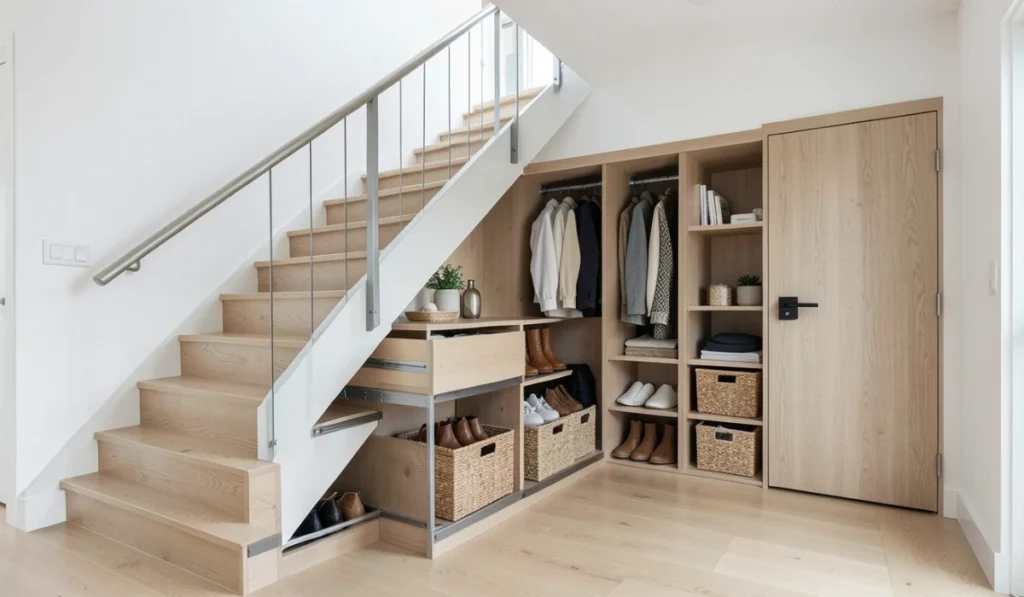
You can reclaim lost square footage by installing custom-built-ins directly into the void beneath your staircases. This turns an awkward architectural necessity into an organized storage hub for coats, shoes, or even a hidden pantry.
Every split-level owner I know complains about storage, yet the massive cavity under the main stairs usually sits empty. I like to turn this dead air into a functional command center.
I have found that deep custom-built-ins on heavy-duty tracks work best for accessing the full depth of the stair cavity. To keep this new storage secure, I recommend installing Schlage smart locks on the cabinet doors.
This is a great way to create a home safe for valuables or sensitive documents without the bulky footprint of a traditional safe. Using Schlage smart locks also allows you to grant access to guests or family members via your phone.
3. Kitchen Layouts: Choosing Between an Island and a Peninsula
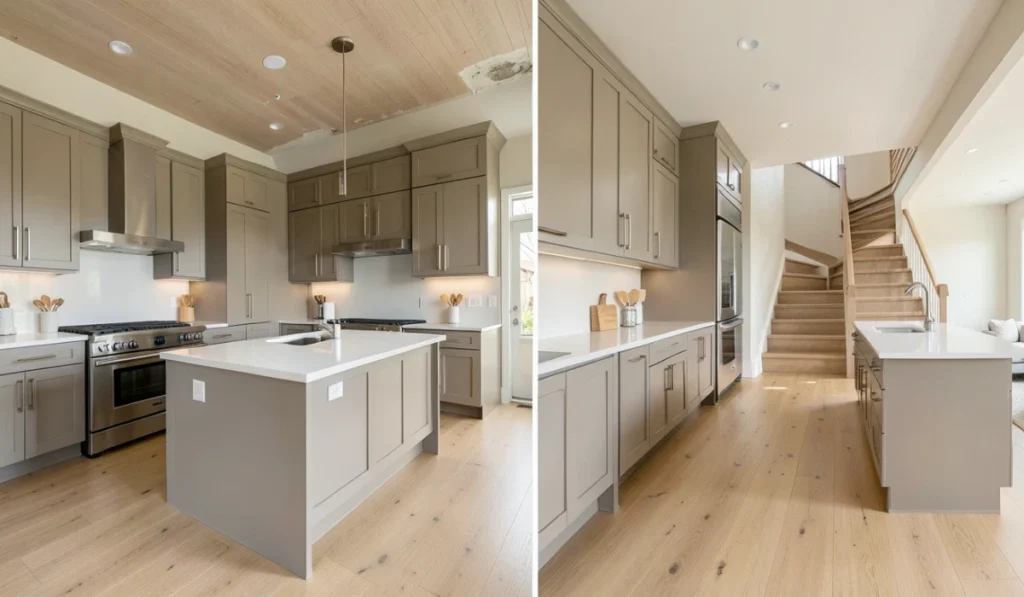
A peninsula often works best in split-levels because it defines the kitchen boundary without disrupting the path to the stairs, while an island requires a wider footprint for proper clearance. Both options benefit from continuous flooring to visually link the kitchen to the rest of the home.
I once helped a homeowner who insisted on an island, only to realize it blocked the main path to the lower level. When planning a kitchen remodeling project in a split-level home, your kitchen footprint must respect the traffic flow between floors.
Of all the reasons behind modern renovations, improving the functional flow of a high-traffic kitchen remains a top priority for most homeowners.
To get the most out of your space, consider these layout factors:
- Storage: Use Wolf Kitchen Cabinets to maximize vertical storage in smaller footprints.
- Visual Unity: Run continuous flooring from the kitchen through the entire main level to avoid a choppy look.
- Ceiling Texture: Apply Armstrong Ceiling Planks to hide old soffits and add architectural interest.
Most designers recommend at least 36 to 42 inches of clearance for an island. If you lack that space, Wolf Kitchen Cabinets configured as a peninsula offer the same prep area with better flow. Using continuous flooring ensures the eye does not stop at the kitchen threshold, making the entire level feel unified.
4. Adding Height: Vaulted Ceilings and Removing Old Soffits
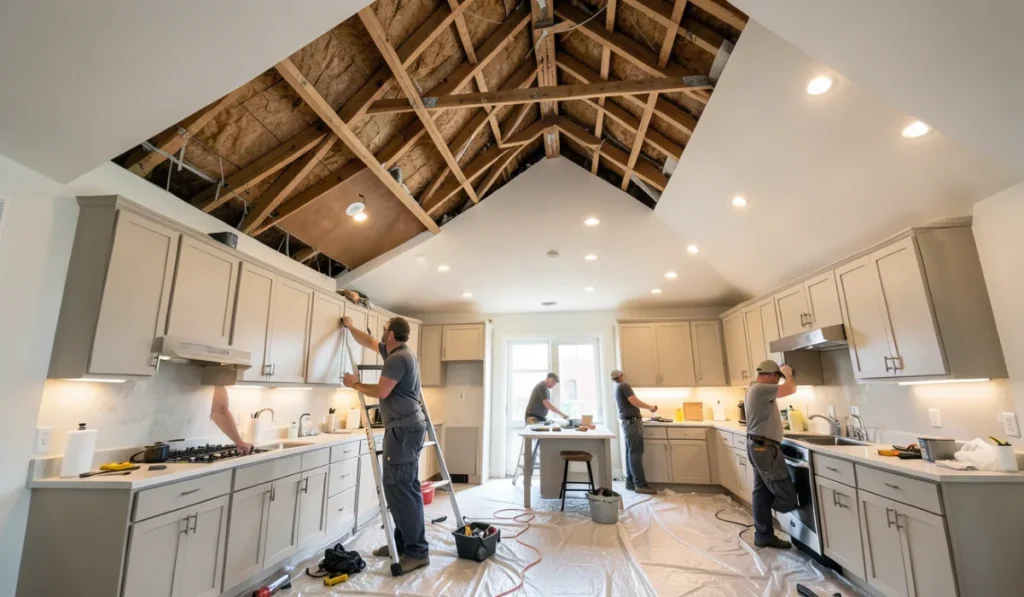
Create cathedral ceilings in most split-levels by removing non-structural soffits and opening the attic cavity. This creates a sense of luxury and provides the perfect height for modern recessed lighting.
Nothing dates a house faster than the popcorn soffits found in 1970s kitchens. I always suggest looking up to find hidden volume that makes cathedral ceilings possible.
When I remove those old kitchen boxes, I typically find an extra 12 inches of height just waiting to be used. Opening up to cathedral ceilings can increase a room’s volume by 40% without changing the roofline.
To make the space feel warm rather than cavernous, I install layers of recessed lighting. Spacing recessed lighting every 4 to 6 feet ensures your new, tall ceilings are brightly lit without creating dark corners.
5. Brighten the Basement: Easy Ways to Bring Light to Lower Levels
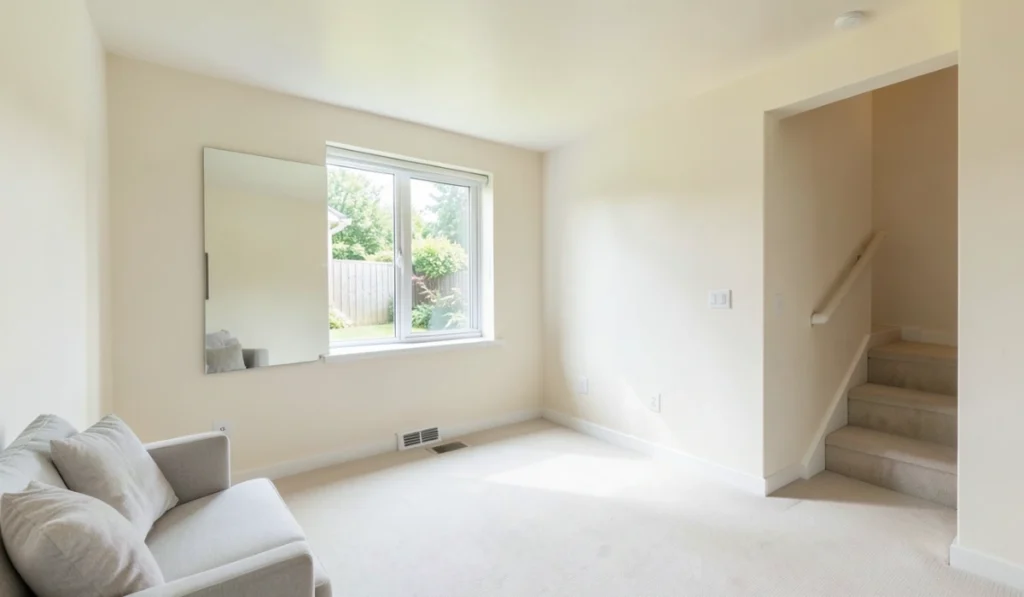
You can brighten a lower level by using strategic mirror placement opposite windows and applying high-LRV (Light Reflectance Value) light-reflective paint. These simple tricks bounce existing natural light deeper into the room.
The lower level of a split-home often feels basement-y because the windows are small. I’ve found that you do not always need to cut into the foundation to increase natural light. Often, as part of a full home remodeling project, simply updating the color palette can change the entire mood of the garden level.
If you place a large mirror directly across from your main window, you effectively double the natural light coming into the room.
I also suggest using light-reflective paint with an LRV of 70 or higher on the walls and ceiling. This prevents the walls from soaking up the sun, making the garden level feel like a true main floor.
6. Extra Living Space: Turning the Lower Level into a Gym or Guest Suite
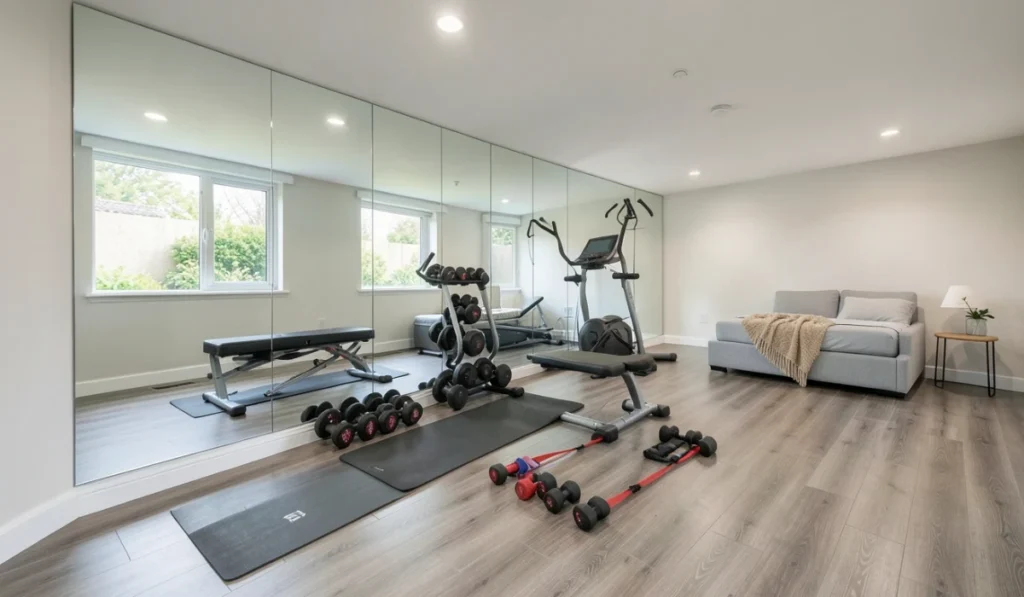
Convert your lower level into a home gym or guest suite by installing durable Luxury Vinyl Plank (LVP) flooring. This flex space adds functional value to the home while staying resilient against the moisture levels common in garden-level floors.
I love the lower level of a split-home because it’s naturally cooler. You can get the perfect spot for a home gym or a quiet flex space. After all, the benefits and value of a home remodeling start with maximizing the square footage to fit your personal hobbies or utilities.
Luxury Vinyl Plank (LVP) is the gold standard for these areas because it is waterproof and softer underfoot for workouts.
I have seen homeowners transform a dusty storage room into a high-end home gym just by swapping the carpet for Luxury Vinyl Plank (LVP) and adding some floor-to-ceiling mirrors. It creates a versatile flex space that works for your morning cardio or as a durable play area for kids.
7. Curb Appeal: Upgrading Your Windows and Front Porch
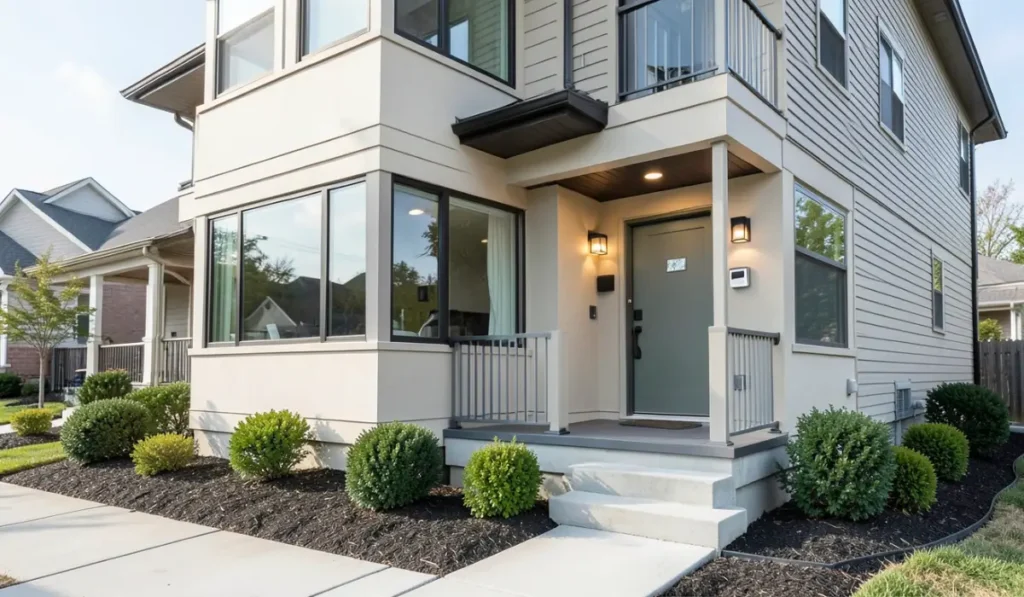
Improve curb appeal by replacing dated double-hung windows with larger Andersen windows or Marvin windows. Adding a modern Ring doorbell at the entry landing provides a tech-forward finish that increases both security and style.
The exterior of a split-level can look flat or lopsided. I have found that the fastest way to fix the facade of your home is through high-quality Andersen windows.
Upgrading to Andersen windows typically yields an ROI of over 70% at resale. If you want a slimmer, more modern frame, Marvin windows are an excellent choice for a contemporary look. Many homeowners start here because these are among the best remodeling projects that add value to your home.
To finish the entryway, I always install a Ring doorbell. It gives you instant eyes on your front landing, which is especially helpful in split-levels where the front door might be on a different level than where you spend most of your time.
8. Bold Colors: Choosing Between Modern Dark Tones or Classic White
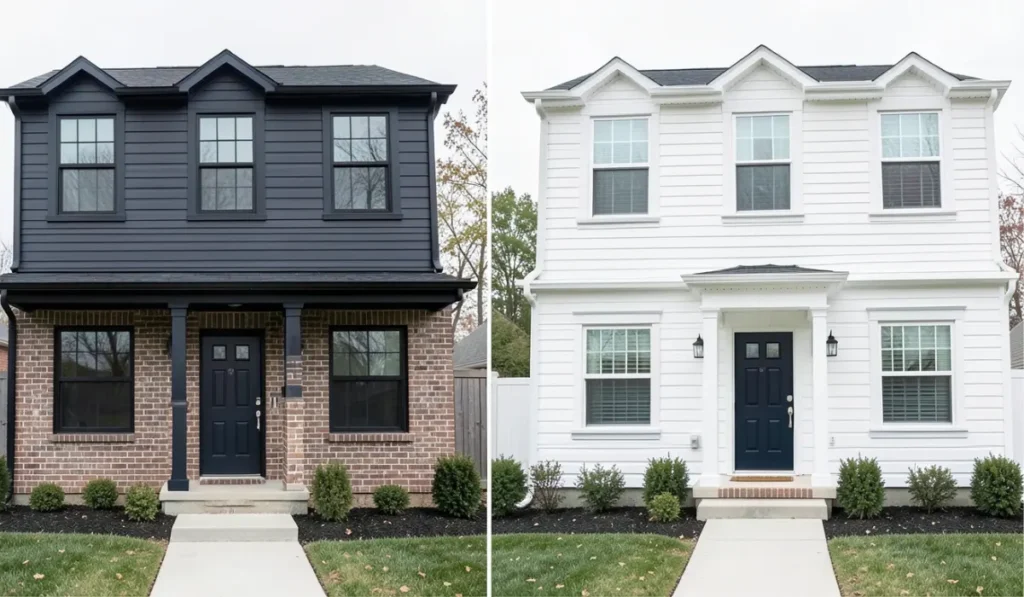
Use Sherwin-Williams or Benjamin Moore premium paints to achieve a professional finish that lasts. Choosing a dark, moody tone can unify different siding materials, while a classic white from Behr makes the home look crisp and clean.
I am noticing a huge shift toward Iron Ore and deep navies for split-levels. The right paint can either hide a home’s awkward lines or make them a bold architectural statement. Understanding how to invest in your home remodel often starts with high-quality finishes that offer the most visual impact for your budget.
While paint is a major player, the trend extends to cabinetry as well; wood cabinets have officially edged out white for the first time in a decade, with medium-toned woods leading the comeback.
I recommend the following brands for specific goals:
- Sherwin-Williams: Best for trendy, deep exterior colors like Iron Ore.
- Benjamin Moore: Excellent for high-durability Scuff-X paint in high-traffic stairways.
- Behr: A great, budget-friendly option for bright, classic white interiors.
At Texas Pro Remodeling, we always suggest testing Sherwin-Williams samples on different sides of the house to see how the light hits the levels. Benjamin Moore’s exterior lines are particularly good for resisting the fading often seen on large, flat split-level walls.
Energy and Acoustic Upgrades For Split Level Home Renovation
You can stop drafts and noise travel by air sealing the rim joists and adding density between floor levels. Using spray foam for gaps and acoustic insulation for floor cavities creates a tighter thermal envelope and a much quieter home.
I have spent plenty of time in split-level crawlspaces, and the biggest energy thief is almost always the rim joist. Because these homes have staggered floors meeting exterior walls at different heights, they have more gaps where outside air and noise leak in.
To improve your home’s performance, focus on these two areas:
- Saving Energy
Most drafts start at the rim joists, where the floor frames meet the foundation. I use spray foam to seal these seams, which stops cold air from being pulled in through the bottom of the house. Data shows that professional air sealing can reduce heating costs by up to 15%.
- Blocking Noise
Sound travels fast across staggered floors. I recommend installing acoustic insulation, specifically mineral wool, between the joists. Mineral wool is much denser than fiberglass and effectively absorbs sound waves. Adding this acoustic insulation prevents the megaphone effect common in open split-level layouts.
I once treated a drafty split-level where the master bedroom sat right over a cold garage. After air sealing with spray foam and adding mineral wool, the room stayed 5 degrees warmer without adjusting the thermostat.
Conclusion
Modernizing your split-level home is all about maximizing sightlines and reclaiming underused space. By opening half-walls, upgrading to Andersen windows, and sealing your rim joists, you turn a choppy layout into a cohesive, energy-efficient masterpiece.
I have seen these specific shifts transform outdated houses into the best-performing homes on the block. We at Texas Pro Remodeling can assess your layout and consult on the best structural upgrades for your unique space.
Frequently Asked Questions
Can I Remove The Wall Between The Kitchen And Living Room In A Split-Level?
Most interior walls in split-levels are load-bearing and require an LVL beam and a structural engineer to safely create an open concept floor plan.
How Do I Fix The Temperature Difference Between The Levels In My Split-Level Home?
Installing HVAC zoning with separate thermostats and air sealing the rim joists with spray foam ensures consistent thermal comfort across all floors.
What Is The Best Way To Modernize A 1970s Split-Level Exterior?
Combining James Hardie fiber cement siding with modern Andersen windows and a vertical siding pattern creates instant contemporary curb appeal.
How Much Does It Cost To Remodel A Split-Level Home?
According to Block Renovation and Houzz data, costs range from $20,000 for cosmetic updates to $150,000+ for major structural and kitchen overhauls.
Are Split-Level Homes Good For Aging In Place?
While stairs are a factor, you can prioritize aging in place by adding Lutron dimmers for visibility, non-slip treads, and converting a lower-level space into a main-floor suite.