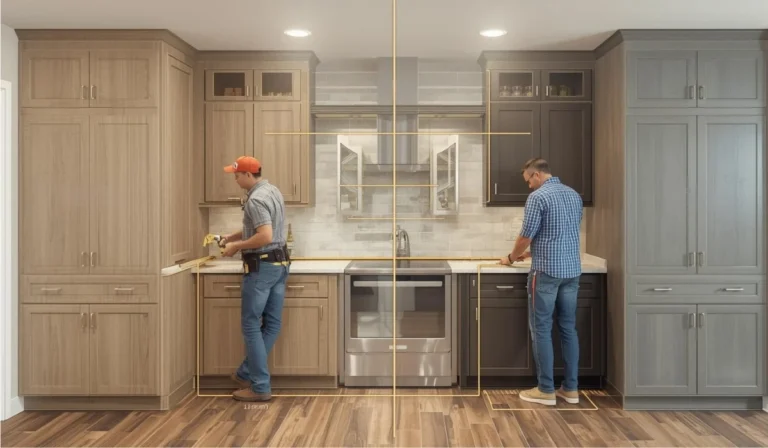



Designing a cabinet is more like solving a puzzle. Working with Texas Pro Remodeling in DFW for quite a long time, I have seen cabinetry being one of the essential queries while planning DFW kitchen remodeling. Homeowners either have old cabinets that are falling apart or just want a new look. Ensuring the right sizes is an important step in both directions.
As a home remodeling expert, I explain how you can measure your kitchen cabinets before remodeling. I’ve also included additional tips on measurement and installation costs throughout DFW as a bonus. Once you understand how these numbers work, you will feel more confident in shopping for cabinets and hiring contractors.
TL;DRStandard kitchen cabinet sizes help ensure a smooth and functional DFW kitchen remodel. Measure base, wall, and tall cabinets carefully, checking walls, floors, ceilings, and utilities to avoid costly mistakes, ensure a proper fit, and make installation easier. |
Why Accurate Kitchen Cabinet Measurements Are Crucial for DFW Homes?
Cabinet measurements are one of the common questions homeowners ask while disicing kitchen remodel. The wrong cabinet size can make or ruin the look of your whole kitchen. It matters because –
For a Precise Fit
Even a small measurement error, like half an inch, can cause functional and aesthetic problems. ⅛ inch is usually considered the gap tolerance level for cabinet design. Without accuracy, they might block appliances or a refrigerator could stick out too far. Precise measurements also ensure drawers and doors open smoothly without obstruction.
Avoid Costly Mistakes
Wrong measurements often mean last-minute adjustments or even reordering cabinets. This can disrupt the budget and move to more expensive modifications anywhere ranging from $50-$5000+. It also delays the remodel.
Maximize Layout and Workflow
Accurate measurements help design a kitchen that makes the most of storage and keeps daily tasks 15-30% more efficient. Proper placement of base and wall cabinets improves the way you cook, clean, and move around. Texas kitchen clearance guidelines recommend at least 40 inches of open space between opposing cabinets or appliances. This is necessary to maintain a safe and efficient workflow.
Simplify Installation
Cabinets measured correctly fit together easily. It makes installation faster through saving 25-40% time, reduces labor costs up to $100-$1000+. If you keep those in mind while calculating or planning a kitchen remodel for your DFW homes.
Fit for Dallas Homes
From a historic Lakewood house to a modern Uptown townhome, precise measurements account for unique walls, windows and doors. This tailored, professional finish increases ROI by 5-10% for that project.
Work with Utilities
Detailed measurements ensure cabinets have clear plumbing and electrical lines. It also avoids expensive $45-$500 rerouting costs and $400-$900 repairing costs.
As a home remodeling expert from Texas Pro Remodeling, my suggestion is to take careful measurements first. Consider getting a local kitchen designer later. This will ensure everything fits perfectly.
Standard Kitchen Cabinet Dimensions & Find Out The Right Cabinet Size For Your Dallas Home
As cabinetry is the most expensive part, it is one of the mandatory steps for your home remodel within your budget. Because size and type matter a lot in the cabinet price.
Proper sizing also maximizes storage and works efficiently with your contractor. Getting the sizing upfront brings other benefits, including reduced installation errors and savings on labor costs with unexpected delays.
Here are the standard measurements of 3 major cabinets we recommend for a kitchen remodel:
Base Cabinets
Base cabinets form the foundation of your DFW kitchen. Choosing the right size ensures your countertops, sinks and appliances fit perfectly. Here are the measurements of base cabinets:
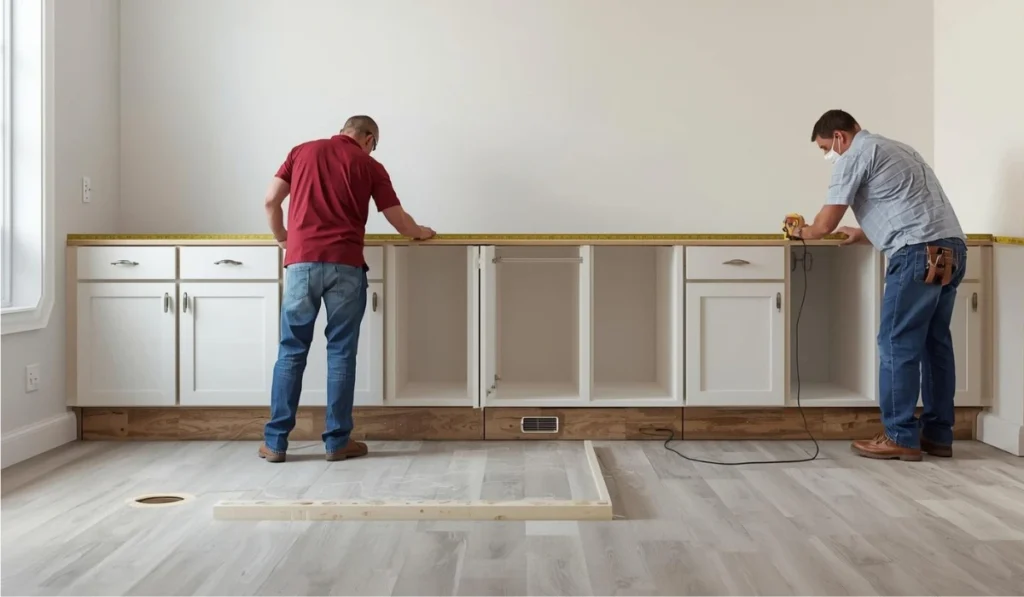
| Dimension | Size Range | Notes |
| Depth | 24 inches (without countertop), 25–26 inches (with 1.5″ countertop) | Matches standard countertop thickness |
| Height | 34.5 inches (without countertop), 36 inches (with countertop) | Ensures proper ergonomics for work surface |
| Width | 9–48 inches (common: 12, 24, 30, 33, 36 inches) | Allows flexibility for appliances and kitchen layout |
Now, you know the measurements for your ase cabinet. Here’s how you can measure it:
- Start with measuring the full wall-to-wall space where your base cabinets will sit. It should be done before you select your cabinet width.
- Take measurements at multiple points along the wall including top, middle and bottom. If the wall in your home is not perfectly straight, then check several spots.
For uneven floors, measure in three spots along the wall. Use the lowest height as your reference. This ensures your base cabinets sit level and your countertops fit perfectly.
- Measure from the drywall surface, not baseboards or trim. So your cabinet dimensions can reflect the true usable space. Trim can throw off cabinet measurements.
- Before confirming cabinet height, check the floor level using a level tool. Slight floor unevenness can impact how your base cabinets support countertops..
- If your home is one of the older DFW homes, especially historic properties, walls and floors may have minor shifts over time. Always double check your cabinet depth and height.
- Confirm measurements around plumbing lines, electrical outlets and appliance rough-ins before finalizing cabinet dimensions.
Always round measurements down to the nearest 1/8 inch to avoid tight fits. Leave slight clearance for fillers if walls are uneven. This gives your installer flexibility and ensures a cleaner, more professional finish.
Beyond sizing, you should also consider installation costs when planning the budget. Typical base cabinets installation with labor combinedly cost $150–$650 per cabinet in DFW. Your installers can work with lower labor costs with proper measurements.
You can expect to reduce it by $50-$300 per linear foot. Accounting for plumbing or appliances, rough-ins early can also save you an extra $50–$100 in adjustments.
Wall Cabinets
Wall cabinets support your everyday kitchen workflow by maximizing vertical storage. It should align cleanly with base cabinets and kitchen appliances. This is necessary for maintaining visual balance and workflow. Choosing the right size keeps frequently used items within your reach. It also ensures your kitchen layout feels balanced.
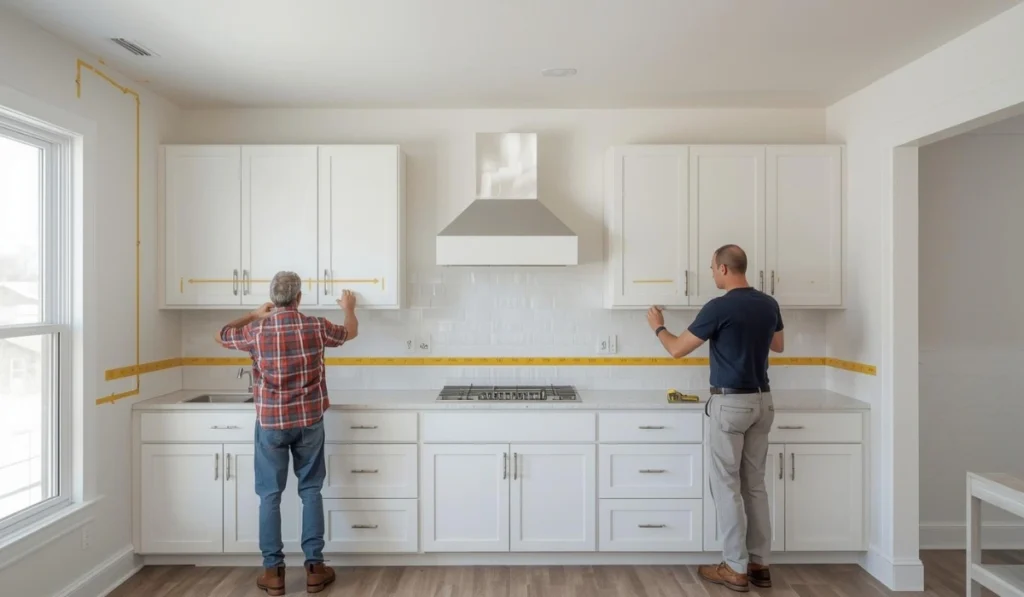
Here are the standard measurements of wall cabinets:
| Dimension | Size Range | Notes |
| Depth | 12–24 inches | Shallower depth improves accessibility and prevents head bumps |
| Height | 12–42 inches (common: 30, 36, 42 inches) | Depends on ceiling height and storage needs |
| Width | 9–48 inches | Coordinates with base cabinets and appliances |
Now that you know the measurements for wall cabinets, here’s how to measure them properly:
- Measuring the distance from the countertop to the ceiling. This determines the ideal cabinet height while maintaining comfortable access.
- Measure the horizontal wall space carefully. Especially around windows, range hoods or refrigerators.
- Check for ceiling unevenness in multiple spots before finalizing height. In some DFW homes, particularly older properties, ceilings may not be perfectly level.
- Confirm clearances around electrical outlets, vent hoods and upper appliance placements such as microwaves.
Mark key measurement points on the wall with painter’s tape before ordering cabinets. This will help you to visualize spacing. It will also prevent misalignment during installation. If your ceiling slopes slightly, measure height at both ends and plan for filler or trim to keep cabinets level.
For budgeting, wall cabinet installation with labor in DFW typically ranges from $100–$300 per cabinet. It depends on the mounting complexity and height as well.
You can save $55-$85 on installation costs by following the standard dimensions. Double-checking appliance rough-ins and vents can also reduce labor by $25–$75 per cabinet before installation.
Tall Cabinets
Tall cabinets add extra vertical storage in your kitchen. It often serves as a pantry alternative. They should align with your base and wall cabinets for a cohesive look. Choosing the right height and width keeps items accessible and ensures your DFW kitchen layout stays functional.
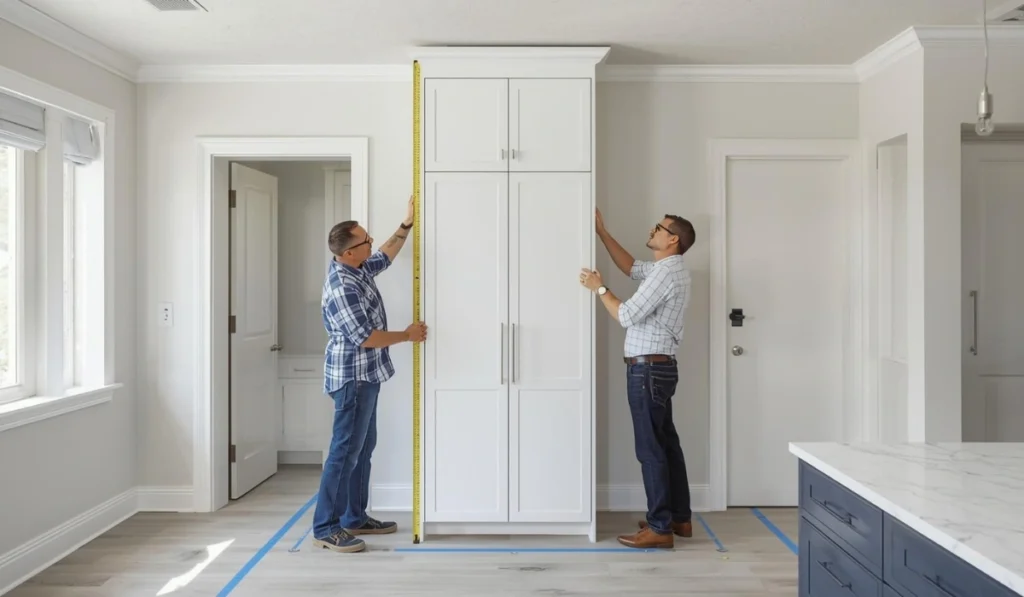
Here are the standard measurements for tall cabinets:
| Dimension | Size Range | Notes |
| Depth | 24 inches | Matches base cabinet depth for a consistent countertop line |
| Height | 84, 90, or 96 inches | Choose based on ceiling height and storage needs |
| Width | 12–36 inches | Fits around doors, windows, and appliances |
Here’s how you can measure it properly:
- Measure from the floor to the ceiling to determine the ideal height, allowing for crown molding or ceiling trim.
- Check horizontal space carefully. Especially near doorways, windows or large appliances.
- To spot low or high spots, walk along the floor with a level or even just a straight edge.
- For the ceiling, look up from different points to see if it slopes or dips.
- Confirm clearances around outlets, vents and any appliances. That will sit adjacent to the cabinets.
- Mark key points on the wall with painter’s tape to visualise spacing. This also prevents misalignment during installation.
Measure around pantry corners and doorways carefully. Tall cabinets need extra clearance to avoid blocking swings or drawers. Always double-check for hidden obstacles. Such as light switches, wall studs or plumbing behind the wall before finalising cabinet placement.
Have a helper hold a tape measure or yardstick while you check multiple spots. Two sets of eyes make it easier to spot uneven floors or ceiling slopes.
In DFW, tall cabinet installation with labor typically ranges from $200–$500 per cabinet. Standard dimensions can save you up to $75–$150 in labor costs. Besides, planning for appliance or vent clearances upfront can reduce adjustment labor by $50–$100 even further.
How To Calculate Kitchen Cabinet Size?
The kitchen is the most important part when it comes to remodel. Even a tiny mistake can cause big headaches later on during installation. That’s why measuring for new cabinets is like a “measure twice, cut once” project. Always measure in total inches rather than feet to avoid math errors.
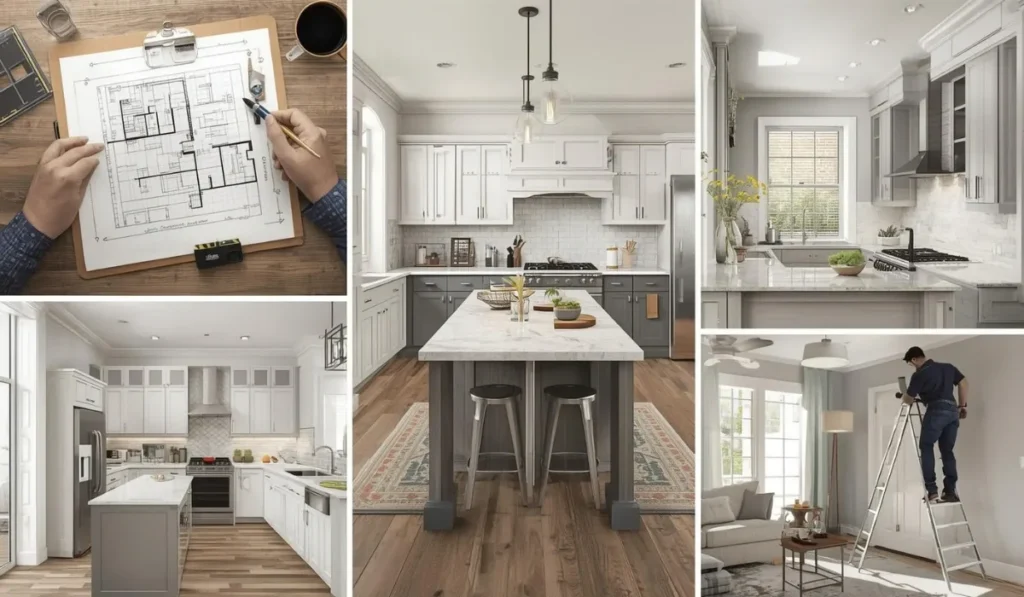
Tools you need: Steel tape measure, step ladder, grid paper, clipboard, two colors of pens, assistant(may a friend to hold the other end of the tape) and digital camera. Always write your numbers down immediately and check them twice.
Follow these steps while calculating your kitchen cabinet:
Sketch the Layout
Use grid paper and a clipboard to draw a rough floor plan. Use one colour pen for the walls and another for the measurement. This helps to avoid confusion in numbers. Put numbers on each wall and utilities by marking the exact locations of windows, doors, plumbing, gas and outlets.
Measure Wall-to-Wall
Use a steel tape measure to find the full length of each wall. Measure it from corner to corner. Call out for your assistant to hold the other end of the tape for those long stretches. Measure from the corners to the center point of your sink, stove and refrigerator. This ensures where your primary cabinet and appliance hubs must sit
Next, while measuring the width of windows and doors, include the exterior trim as well. Make sure there is enough clearance for every cabinet door and drawer. This helps to swing it open fully without hitting a wall or door handle.
Check for Uneven Spots
Grab your step ladder to measure the ceiling height. Aim for at least three different spots along each wall. Since floors and ceilings are rarely perfectly level, use the shortest measurement as your guide. So your tall cabinets actually fit.
Identify Obstacles
Use a digital camera to snap photos of any floor vents, radiators or soffits that could block a cabinet frame. Note these on your sketch so you aren’t surprised during the installation.
Conclusion
Taking the time to measure your base, wall, and tall cabinets accurately makes all the difference in your DFW kitchen. With proper measurements, you’ll avoid fit issues, maximise storage and maintain a smooth workflow.
Even small checks, like uneven floor or ceiling, can save frustration. It also ensures your cabinets look and function perfectly. You can contact Texas Pro Remodeling while choosing your cabinetry. We are experts in transforming homes through remodeling projects.
Frequently Asked Questions
What are the standard measurements for kitchen cabinets?
Standard kitchen cabinets usually come in three main types: base cabinets, wall cabinets, and tall cabinets. Base cabinets are typically 34.5 inches high and 24 inches deep, which becomes 36 inches with the countertop installed. Wall cabinets are usually 12–24 inches deep and range from 12 to 42 inches in height. Tall pantry cabinets can range from 84 to 96 inches high, depending on ceiling height and kitchen layout.
How do you determine the right cabinet size for your kitchen?
To determine the right cabinet size, start by measuring your kitchen’s wall length, ceiling height, and appliance spacing. You’ll also need to consider the standard work triangle between the sink, stove, and refrigerator. Many homeowners work with designers or contractors to ensure cabinets fit the layout while maintaining comfortable walking space and storage efficiency.
Is a 10×12 kitchen considered small?
A 10×12 kitchen is generally considered a medium-sized kitchen in most homes. It provides enough room for standard cabinets, appliances, and a comfortable work area. While it may not accommodate a large island, it’s still spacious enough for efficient layouts like L-shaped or galley kitchens.
Is 42 inches a standard cabinet size?
Yes, 42 inches is a common standard height for upper kitchen cabinets. Many homeowners choose 42-inch wall cabinets because they extend closer to the ceiling, providing more storage space and a cleaner, built-in look compared to shorter cabinets.
How much do cabinets cost for a 12×12 kitchen?
Kitchen cabinets for a 12×12 kitchen typically cost between $4,000 and $15,000, depending on the material, brand, and installation. Stock cabinets are the most affordable option, while semi-custom and custom cabinets can significantly increase the price due to design flexibility and higher-quality materials.
How deep are standard upper cabinets?
Standard upper cabinets are typically 12 inches deep. However, some kitchens use 15-inch or even 24-inch deep wall cabinets to provide additional storage, especially in modern kitchens with larger layouts.
What is the most common kitchen cabinet pull size?
The most common cabinet pull sizes are 3 inches, 5 inches, and 96mm (about 3.78 inches) center-to-center spacing. Among these, 5-inch pulls are especially popular in modern kitchens because they offer a comfortable grip and a clean, balanced look on most cabinet doors and drawers.